
Why Traditional Nylon Materials Face Challenges in High Heat Environments
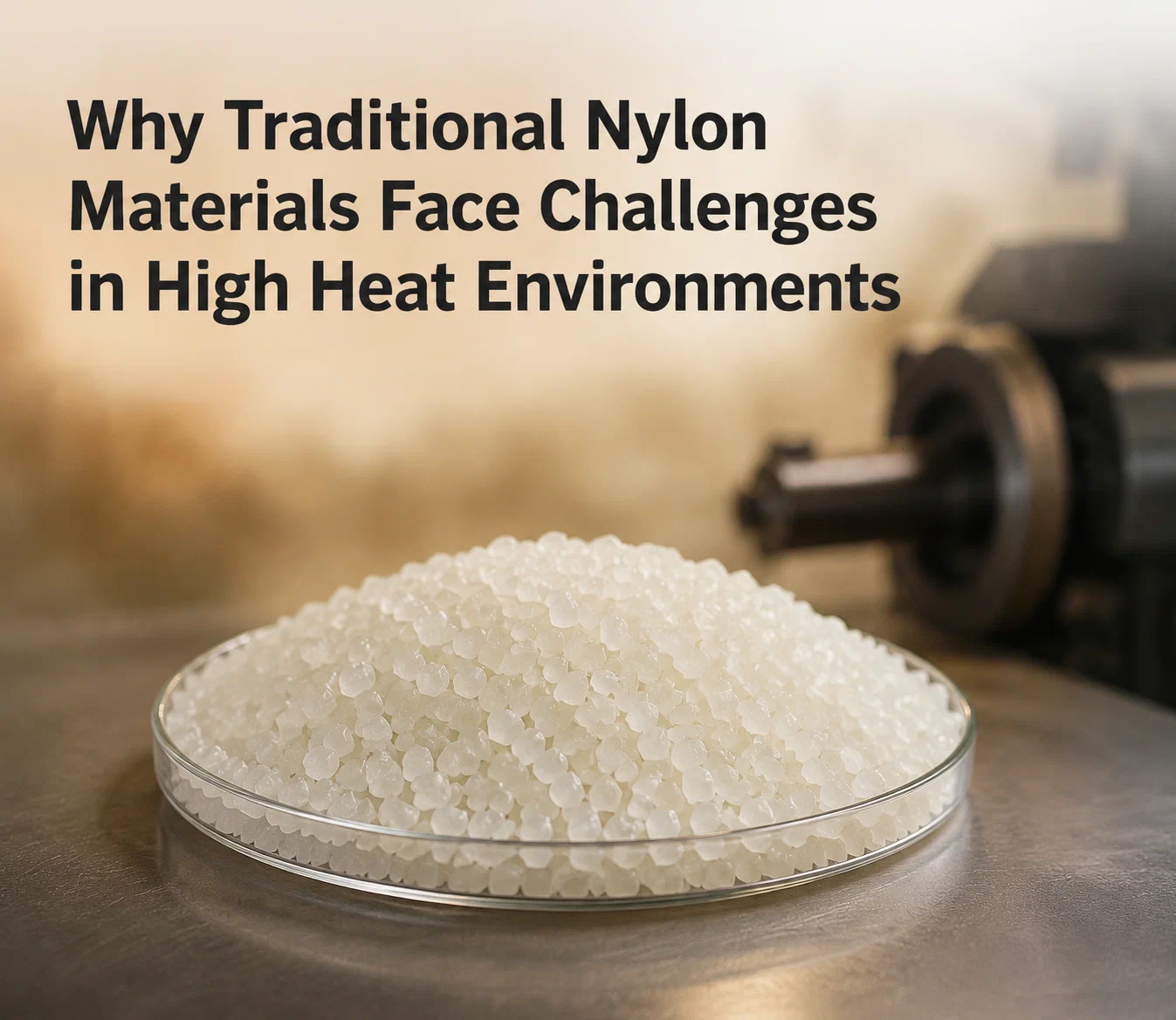
Nylon materials are widely used in engineering plastic applications because of their excellent strength, wear resistance, and processing performance. PA6 and PA66, as two of the most commonly used nylon materials, are frequently selected for manufacturing plastic components that require balanced mechanical properties and durability.
However, as industries continue to develop products for more demanding environments, standard nylon materials may face limitations when exposed to continuous high temperatures. In applications where plastic components operate under elevated temperatures for long periods, maintaining stable mechanical performance becomes a critical challenge.
One of the main challenges of traditional nylon materials in high heat environments is the reduction of mechanical properties. When nylon is exposed to elevated temperatures, its molecular structure may become more active, which can gradually affect strength, stiffness, and load-bearing capability. Components that experience continuous mechanical stress may show reduced performance over time.
Thermal aging is another important concern. Long-term exposure to heat can accelerate material aging, causing changes in toughness, surface appearance, and overall durability. For plastic components designed for extended service life, selecting a material with better thermal stability is essential.
Dimensional stability can also become a challenge under high temperature conditions. Nylon materials naturally absorb moisture, and temperature changes can influence material expansion and contraction. Without proper material optimization, plastic components may experience dimensional changes that affect assembly accuracy and product performance.
These challenges become more significant in applications where plastic parts are exposed to heat, mechanical loads, and environmental changes simultaneously. Standard nylon materials may not always provide sufficient reliability for these demanding conditions.
To overcome these limitations, high temperature nylon materials are developed through advanced modification technologies. By adjusting the material formulation and adding specific performance-enhancing components, modified nylon can achieve improved thermal stability while maintaining the advantages of nylon processing performance.
High temperature PA6 materials are designed to maintain better mechanical properties under elevated temperatures. Compared with standard PA6, modified grades can provide improved heat resistance, reduced performance loss, and better long-term reliability in demanding applications.
Material modification methods may include reinforcement, thermal stabilizers, and other functional additives. For example, glass fiber reinforced PA6 can improve stiffness and dimensional stability, while heat-resistant additives help reduce degradation during continuous temperature exposure.
The selection of suitable nylon materials depends on the actual working conditions of the plastic component. Engineers need to consider operating temperature, mechanical requirements, environmental exposure, and expected service life when choosing between standard nylon and high performance modified nylon solutions.
In addition to material selection, injection molding process control also influences the final performance of high temperature nylon components. Proper mold design, processing parameters, and quality control help ensure that modified materials achieve their intended performance after production.
Through advanced material modification technology, traditional nylon limitations can be addressed and optimized for more challenging applications. High temperature PA6 and other modified nylon solutions help manufacturers achieve improved durability and performance in demanding environments.
Techinherit provides customized engineering plastic solutions, including high temperature PA6, modified PA6, PA66 materials, reinforced nylon, and functional plastic compounds. Through material development and manufacturing experience, we help customers select suitable materials for reliable plastic component production.
Request a Free Design Review
Looking to reduce the cost of your next plastic injection molding project? Contact our engineering team today for a free consultation.
