
Which Material Is Suitable for EV Charging Guns?
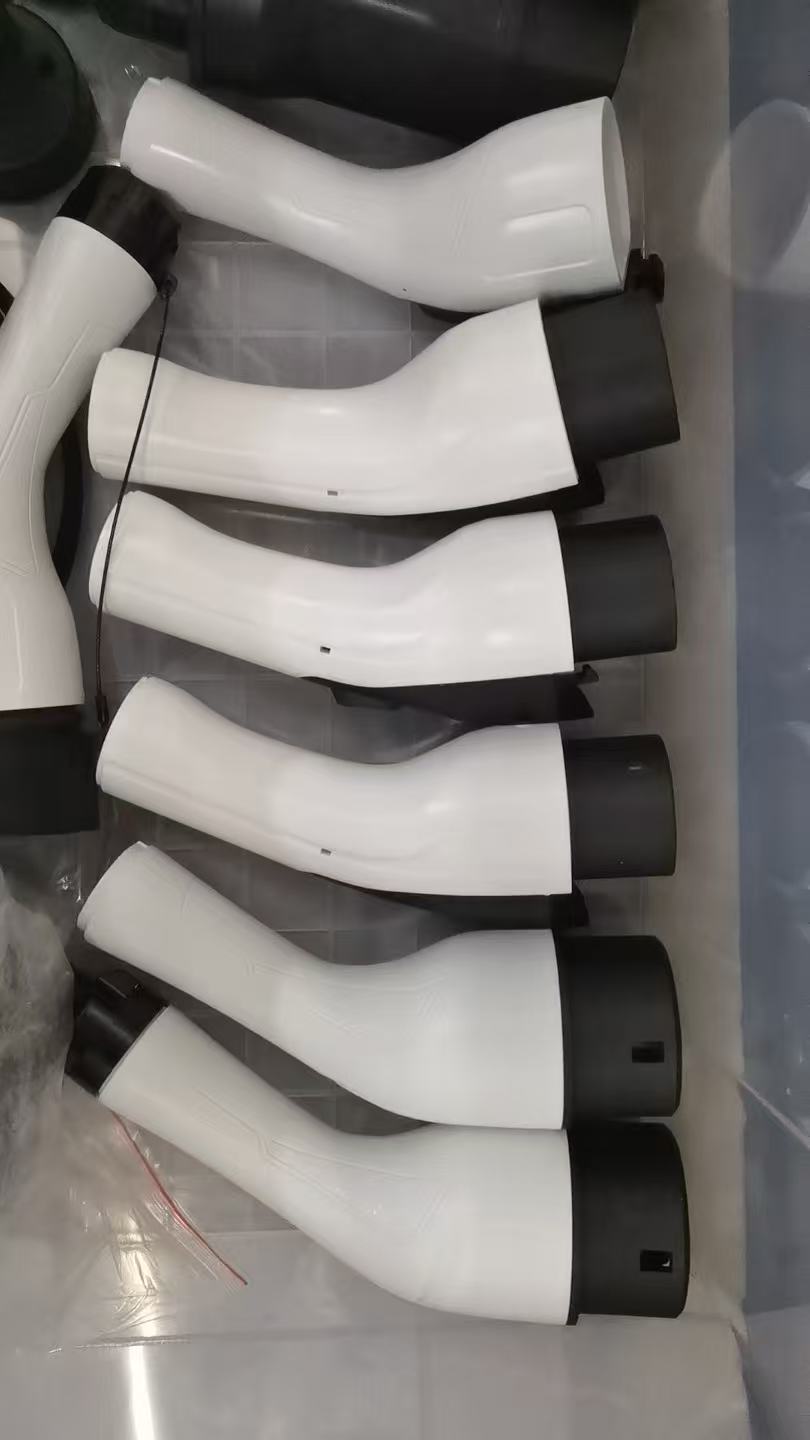
EV charging guns operate in demanding electrical, mechanical and outdoor environments. The plastic material used for the housing and internal components must provide a good balance of mechanical strength, heat resistance, flame retardancy, electrical insulation, dimensional stability and weather resistance.
So, which material is suitable for an EV charging gun?
For many structural and electrical-insulation components, flame-retardant PA66 reinforced with glass fiber, such as PA66 GF30, is an important material option. Depending on the component design and performance requirements, PC/ABS FR, PBT GF and other engineering plastics can also be considered.
The right material should always be selected according to the specific charging standard, component design, operating temperature, electrical requirements and certification requirements.
1. Why Is Material Selection Important for EV Charging Guns?
An EV charging gun may experience repeated plugging and unplugging, mechanical impact, vibration, temperature changes, moisture and electrical heating.
The plastic material therefore needs to provide several important properties:
-
High mechanical strength
-
Good impact resistance
-
High heat resistance
-
Flame retardancy
-
Electrical insulation
-
Dimensional stability
-
Resistance to moisture and environmental conditions
-
Good injection molding performance
-
Long-term reliability
For high-voltage charging applications, flame performance and electrical properties are particularly important. Depending on the final application, requirements such as UL94 flame rating, CTI, glow-wire performance and relevant IEC/UL standards may need to be evaluated separately.
2. PA66 GF30: A Strong Option for Structural Components
PA66 GF30 means polyamide 66 reinforced with approximately 30% glass fiber.
The glass fiber reinforcement significantly increases stiffness, strength and dimensional stability compared with unreinforced nylon.
For EV charging applications, PA66 GF30 can be considered for structural components where the design requires:
-
High mechanical strength
-
Good rigidity
-
High heat resistance
-
Good dimensional stability
-
Resistance to deformation
-
Long-term structural performance
When flame-retardant performance is required, a flame-retardant PA66 GF30 grade can be developed to meet the required flame rating.
Techinherit's new-energy plastic parts solutions include PA6 GF30 and PA66 GF30 grades with electrical and flame-retardant requirements, while its charging-gun applications also include PC/ABS FR solutions.
3. Flame-Retardant PA66 for High-Voltage Components
For components located close to electrical terminals or other high-voltage areas, standard PA66 GF30 may not be sufficient.
A flame-retardant PA66 formulation can provide additional fire-safety performance.
Depending on the grade and final part thickness, customers may specify requirements such as:
-
UL94 V-0
-
High CTI
-
Good dielectric performance
-
Heat resistance
-
Low deformation
-
Good mechanical strength
-
Stable performance after moisture exposure
It is important to understand that UL94 V-0 and CTI are different properties. A material meeting V-0 does not automatically mean that it has the required CTI performance. The complete material specification should therefore be evaluated according to the final application.
Glass-fiber-reinforced PA66 with flame retardancy is also used for connector and charging-related structural applications because it combines rigidity, heat resistance and flame performance.
4. PC/ABS FR: Suitable for Charging Gun Housings
For the external housing of an EV charging gun, PC/ABS FR is another practical material option.
PC/ABS combines the advantages of polycarbonate and ABS and can provide:
-
Good impact resistance
-
Good surface appearance
-
Good processing performance
-
Flame-retardant options
-
Good tactile feel
-
Suitable outdoor-performance options when properly formulated
The external housing is directly exposed to mechanical impact and handling. Therefore, impact resistance and surface quality can be just as important as stiffness.
For some charging-gun housing designs, Techinherit uses PC/ABS FR with UL94 V-0 performance, impact resistance and UV stability.
5. PBT GF: Another Option for Electrical Connectors
PBT GF is another engineering plastic commonly considered for electrical connector applications.
PBT has relatively low moisture absorption compared with nylon and offers good dimensional stability and electrical performance.
It can be suitable for:
-
Connector housings
-
Terminal carriers
-
Electrical insulating components
-
Multi-pin connector structures
For applications requiring tight terminal positioning, dimensional stability can be an important reason to evaluate PBT GF.
However, the final material should still be selected according to the required flame rating, CTI, temperature resistance, mechanical requirements and part geometry.
6. Recommended Material Selection by EV Charging Gun Component
Different parts of an EV charging gun do not necessarily need the same material.
| Component | Possible Material | Main Requirements |
|---|---|---|
| Outer housing | PC/ABS FR | Impact resistance, flame retardancy, appearance |
| Structural housing | PA66 GF30 / FR PA66 GF30 | Strength, rigidity, heat resistance |
| Terminal carrier | PA66 FR / PBT GF | Electrical insulation, dimensional stability |
| Connector support | PA66 GF / PBT GF | Strength, precision, heat resistance |
| High-temperature electrical components | High-temperature engineering plastics | Heat resistance, electrical performance |
| Sealing components | Silicone / suitable elastomer | Waterproofing, weather resistance |
This table is a starting point rather than a universal specification. The actual material grade should be determined after reviewing the customer's drawings, working temperature, electrical requirements and certification targets.
7. What Problems Can Occur During Injection Molding?
Selecting the correct resin is only the first step.
EV charging gun components often have complex structures, thin walls, ribs, bosses and tight dimensional requirements. Glass-fiber-reinforced materials can also create fiber-orientation-related shrinkage and warpage.
Common injection molding problems include:
Short Shot
Insufficient filling may occur because of inappropriate injection speed, pressure, melt temperature, gate design or venting.
Warpage
Glass fibers can create anisotropic shrinkage. If the mold cooling system, gate location or processing parameters are not properly optimized, the finished component may deform.
Floating Fibers
Glass fibers may appear on the surface, affecting appearance and surface quality.
Flash
Excessive injection pressure, insufficient mold clamping force or problems with the parting line can result in flash.
Dimensional Variation
Moisture absorption, material shrinkage, mold temperature and processing conditions can all affect the final dimensions of nylon components.
Therefore, material selection should be combined with mold-flow analysis, mold design optimization and injection-process control.
8. How Should You Choose the Right Material?
Before selecting a material for an EV charging gun, we recommend evaluating the following parameters:
1. Working temperature
What is the maximum temperature of the charging gun during normal and fast charging?
2. Flame-retardant requirement
Does the application require UL94 V-0 or another flame-retardant standard?
3. Electrical requirements
Does the component require high CTI, high insulation resistance or specific dielectric performance?
4. Mechanical requirements
Does the housing need to pass impact, drop, vibration or repeated-use testing?
5. Dimensional requirements
Are there tight tolerances around terminals, locking structures or mating interfaces?
6. Environmental requirements
Will the product be exposed to UV, rain, humidity, temperature cycling, chemicals or outdoor conditions?
7. Injection molding requirements
Is the material suitable for the customer's mold structure, wall thickness and production cycle?
9. Why Work With a Material and Injection Molding Supplier?
For EV charging components, material selection, mold design and injection molding are closely connected.
A material may have excellent performance on its datasheet but still produce defects if the formulation, drying conditions, mold design or injection parameters are not properly controlled.
Techinherit provides an integrated approach covering:
-
Modified engineering plastics
-
PA6 and PA66 materials
-
Glass-fiber-reinforced nylon
-
Flame-retardant engineering plastics
-
Mold development
-
Injection molding
-
Material selection
-
Process optimization
-
Quality inspection
Our new-energy plastic parts solutions cover charging-gun housings, charging-gun accessories, waterproof connectors and photovoltaic connectors.
Conclusion
There is no single plastic material that is suitable for every EV charging gun component.
For structural components requiring high strength, rigidity and heat resistance, PA66 GF30 or flame-retardant PA66 GF30 can be an excellent option.
For external charging-gun housings requiring impact resistance, flame retardancy and good surface quality, PC/ABS FR is another suitable solution.
For precision electrical connector components where dimensional stability and electrical performance are important, PBT GF may also be considered.
The best material depends on the complete application requirements rather than the material name alone.
Techinherit can help customers evaluate the material, mold and injection molding process together to develop a reliable plastic solution for EV charging guns and other new-energy components.
If you are developing an EV charging gun housing, connector or other plastic component, send us your part drawing, application requirements and target material properties. Our engineering team can recommend a suitable material solution and injection molding process.
Request a Free Design Review
Looking to reduce the cost of your next plastic injection molding project? Contact our engineering team today for a free consultation.
