
Why 30% Glass Fiber Reinforced Nylon Is One of the Most Popular Engineering Plastics
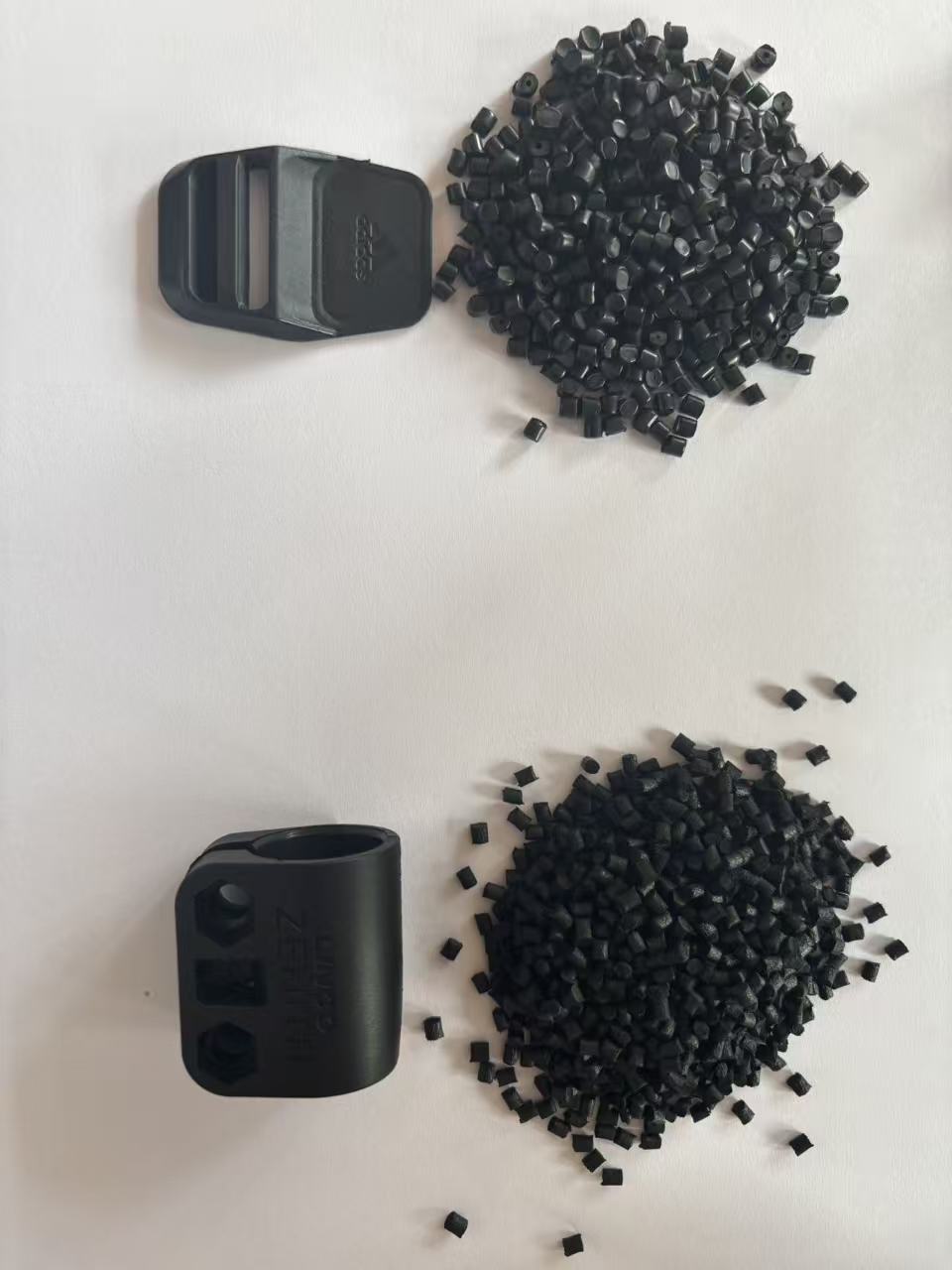
30% glass fiber reinforced nylon (GF30) is one of the most widely used grades of reinforced engineering plastic for structural injection-molded components.
By adding approximately 30% glass fiber to PA6 or PA66, the material achieves a useful balance between strength, stiffness, heat resistance, dimensional stability, impact performance, processability, cost and availability.
Compared with unfilled nylon, GF30 can provide substantially higher mechanical strength and stiffness while significantly reducing molding shrinkage. Compared with higher glass-fiber loadings such as GF40 or GF50, 30% glass fiber generally offers better processability, surface appearance and overall cost-performance.
This combination makes PA6-GF30 and PA66-GF30 popular choices for automotive components, electrical housings, power-tool parts, industrial brackets, gears, fan components, office-chair structural parts and other applications where engineering plastics need to carry mechanical loads.
What Is 30% Glass Fiber Reinforced Nylon?
30% glass fiber reinforced nylon, commonly written as GF30, is a polyamide compound containing approximately 30% glass fiber by weight.
The base resin is normally:
- PA6-GF30
- PA66-GF30
The glass fibers reinforce the polymer matrix and improve its mechanical and thermal performance.
The "30%" refers to the approximate glass-fiber content, not the type of nylon.
For example:
PA66-GF30 = PA66 resin + approximately 30% glass fiber
The exact formulation can vary between material suppliers. Compounds may also contain heat stabilizers, impact modifiers, lubricants, flame retardants, UV stabilizers, pigments or other additives depending on the application.
PA6-GF30 vs. PA66-GF30
Although both materials contain approximately 30% glass fiber, their base polymers are different.
PA6-GF30 is often selected when customers need a combination of good mechanical performance, impact resistance, processability and cost efficiency.
PA66-GF30 is generally preferred when higher temperature resistance, stiffness and dimensional stability are required.
The correct choice should therefore be based on the actual operating temperature, mechanical load, moisture exposure, dimensional requirements and injection-molding conditions.
How Much Does 30% Glass Fiber Improve Nylon?
The improvement depends on the exact resin formulation, glass-fiber type, testing method, moisture condition and supplier grade.
Typical dry-as-molded values for commercial PA66 and PA66-GF30 grades may fall within approximately these ranges:
| Property | Unfilled PA66 | PA66-GF30 | Typical Effect |
|---|---|---|---|
| Tensile strength | ~80–90 MPa | ~180–200 MPa | Significantly higher |
| Flexural modulus | ~2,800–3,200 MPa | ~8,500–9,500 MPa | About 3× higher |
| HDT @ 1.8 MPa | ~70–80°C | Often >200°C | Substantially higher |
| Density | ~1.14 g/cm³ | ~1.35–1.40 g/cm³ | Higher |
| Mold shrinkage | ~1.2–1.8% | ~0.2–0.6% | Significantly lower |
| Water absorption | Higher | Lower than unfilled PA66 | Reduced |
These values are typical reference ranges rather than guaranteed specifications. Actual performance must always be confirmed using the technical datasheet of the specific grade being quoted.
For engineering design, customers should also consider moisture conditioning, fiber orientation, temperature, loading direction and long-term creep rather than relying on a single room-temperature datasheet value.
Why Is GF30 Such a Popular Glass-Fiber Loading?
The main reason is simple:
30% glass fiber provides a strong balance between reinforcement and processability.
Increasing glass-fiber content does not automatically make a plastic part better.
For example, moving from GF30 to GF40 or GF50 can increase stiffness and strength, but it can also introduce additional challenges:
- More difficult material flow
- Higher injection pressure
- Greater fiber orientation
- More visible fiber read-through
- Increased anisotropic shrinkage
- Potentially poorer weld-line performance
- Greater screw and barrel wear
- More demanding mold design
- Higher material cost
For many structural plastic components, GF30 provides enough mechanical performance without introducing unnecessary processing difficulties.
That is why PA6-GF30 and PA66-GF30 are commonly used as starting points when engineers are selecting a reinforced nylon grade.
GF15 vs. GF30 vs. GF50: Which Should You Choose?
Glass-fiber loading should be selected according to the actual requirements of the part.
GF15
A lower glass-fiber loading such as GF15 may be appropriate when the application requires improved stiffness and strength while retaining relatively good impact performance and processability.
Typical applications include:
- Housings
- Covers
- Brackets
- Consumer products
- General engineering components
GF30
GF30 is often the best starting point for structural components.
It can provide a strong combination of:
- High stiffness
- High tensile strength
- Improved heat resistance
- Better dimensional stability
- Reduced molding shrinkage
- Good cost-performance
- Widely available commercial grades
Typical applications include:
- Automotive structural components
- Electrical housings
- Industrial brackets
- Gears
- Fan components
- Power-tool housings
- Office-chair structural components
- Connector components
- Mechanical equipment parts
GF50
GF50 should generally be considered when very high stiffness or dimensional stability is the primary design requirement.
However, the additional reinforcement can make injection molding more demanding and may negatively affect surface appearance and impact performance depending on the formulation.
For this reason, GF50 should not automatically be considered an upgrade over GF30.
The correct material is the one that meets the engineering requirements with sufficient safety margin and reasonable manufacturing cost.
PA6-GF30 vs. PA66-GF30
One of the most common questions from customers is:
"Should I use PA6-GF30 or PA66-GF30?"
There is no universal answer. The choice depends on the application.
| Factor | PA6-GF30 | PA66-GF30 |
|---|---|---|
| Mechanical strength | High | Very high |
| Stiffness | High | Very high |
| Heat resistance | High | Generally higher |
| Impact performance | Generally good | Good |
| Processability | Generally easier | More demanding |
| Dimensional stability | Good | Very good |
| Cost | Often more economical | Often higher |
| Typical applications | Structural parts, housings, industrial parts | Automotive, electrical, high-temperature structural parts |
When PA6-GF30 May Be Better
PA6-GF30 can be a good choice when:
- Operating temperature is moderate
- Good impact performance is important
- Cost needs to be controlled
- Injection molding efficiency is important
- Extreme heat resistance is not required
When PA66-GF30 May Be Better
PA66-GF30 may be preferred when:
- Higher continuous operating temperatures are expected
- Higher stiffness is required
- Dimensional stability is critical
- The component experiences significant mechanical loading
- The application is automotive, electrical or industrial
However, actual performance varies considerably between grades, so the final decision should be based on the supplier's datasheet and application testing.
Why Does GF30 Nylon Have Better Dimensional Stability?
One major advantage of glass-filled nylon is its lower molding shrinkage.
Unfilled nylon can experience relatively high shrinkage because of polymer crystallization and thermal contraction.
Glass fibers have much lower thermal expansion than the polymer matrix. They therefore restrict polymer shrinkage during cooling.
This can help improve:
- Dimensional consistency
- Part-to-part repeatability
- Flatness
- Assembly fit
- Tolerance control
However, there is an important consideration:
Glass Fiber Creates Anisotropy
During injection molding, short glass fibers tend to orient in the direction of material flow.
As a result, shrinkage is not necessarily the same in every direction.
This can cause:
- Warpage
- Uneven shrinkage
- Flatness problems
- Hole-position deviations
- Assembly problems
Therefore, using GF30 successfully is not simply a matter of selecting the material.
Gate location, runner design, wall thickness, rib structure, packing pressure, mold temperature and cooling design all influence the final dimensional result.
Why Does Glass-Filled Nylon Sometimes Have Surface Problems?
A common problem with GF30 injection molding is poor surface appearance.
Typical defects include:
- Glass fiber exposure
- Fiber read-through
- Floating fibers
- Flow marks
- Weld lines
- Silver streaks
- Uneven gloss
- Burn marks
- Sink marks
These problems can result from a combination of material, mold and processing conditions.
For example, fiber orientation near the surface can create visible differences in texture and gloss.
If the customer requires a high-quality visible surface, simply changing from unfilled nylon to GF30 may not solve the problem.
The following factors should be evaluated:
- Material formulation
- Glass-fiber length and sizing
- Mold temperature
- Melt temperature
- Injection speed
- Packing pressure
- Gate position
- Gate size
- Mold surface finish
- Drying condition
For demanding visible components, material selection and injection-process optimization should be performed together.
Moisture Control Is Critical When Molding GF30 Nylon
Although glass fiber reduces the relative amount of moisture absorbed compared with unfilled nylon, PA6 and PA66 remain moisture-sensitive engineering plastics.
If nylon is processed with excessive moisture, the polymer can undergo hydrolytic degradation during melting.
Potential symptoms include:
- Reduced mechanical strength
- Brittle parts
- Silver streaks
- Poor surface appearance
- Lower molecular weight
- Unstable processing
- Reduced long-term performance
For this reason, GF30 nylon should be properly dried before injection molding.
A commonly used target is to process the material at low moisture content, often below approximately 0.15% depending on the specific grade and supplier recommendations.
Drying temperature and time should always follow the material manufacturer's technical datasheet.
A desiccant dryer with controlled dew point is generally preferred for production molding.
GF30 Nylon and Injection Molding
30% glass fiber reinforced nylon can be injection molded efficiently, but the process needs to account for the abrasive nature of glass fiber and the material's processing characteristics.
Important parameters include:
1. Material Drying
Ensure the resin reaches the recommended moisture level before molding.
2. Melt Temperature
Use the temperature range specified by the material supplier.
Too low can cause:
- Poor filling
- High injection pressure
- Weld-line problems
Too high can increase:
- Material degradation
- Gas generation
- Surface defects
3. Mold Temperature
Mold temperature influences crystallization, surface quality, shrinkage and dimensional stability.
4. Injection Speed
Injection speed must be optimized according to the geometry.
Too slow may create weld lines and flow marks.
Too fast can increase shear heating, fiber orientation and surface defects.
5. Packing Pressure
Packing needs to compensate for material shrinkage while avoiding excessive internal stress.
6. Cooling
Uneven cooling is a common contributor to warpage.
For GF30 parts with strict dimensional requirements, cooling-channel design is especially important.
Glass Fiber Wear on Injection-Molding Equipment
Glass fiber is abrasive.
Long-term processing of GF30 materials can accelerate wear on:
- Screw flights
- Barrel surfaces
- Check rings
- Nozzles
- Shut-off components
For continuous GF30 production, manufacturers may consider wear-resistant components such as:
- Bimetallic barrels
- Hardened screws
- Wear-resistant check rings
- Suitable screw geometries
Proper equipment selection can help maintain stable processing and extend machine-component life.
Can GF30 Nylon Replace Metal?
In some applications, yes.
GF30 nylon can provide an attractive alternative to metal when designers want to reduce:
- Weight
- Part count
- Manufacturing operations
- Assembly cost
- Corrosion risk
Compared with metals, reinforced nylon can also allow manufacturers to integrate several functions into a single injection-molded component.
For example, a plastic structural component may combine:
- Mounting bosses
- Clips
- Ribs
- Snap-fits
- Cable-management features
- Bearing locations
into one part.
However, metal replacement should not be based only on tensile strength.
Engineers should also evaluate:
- Long-term creep
- Fatigue
- Operating temperature
- Chemical exposure
- Moisture
- Impact
- Load direction
- Safety factor
- Fiber orientation
- Weld-line strength
For long-term load-bearing applications, creep performance at the actual operating temperature is particularly important.
Common Applications of PA6-GF30 and PA66-GF30
Because of their combination of strength, stiffness and dimensional stability, GF30 nylon grades are widely used in engineering applications.
Automotive Components
- Brackets
- Structural supports
- Sensor housings
- Fan components
- Engine-compartment components
- Electrical components
Electrical & Electronics
- Connector housings
- Insulating components
- Terminal components
- Electrical housings
- Switch components
Industrial Equipment
- Gears
- Brackets
- Mechanical supports
- Housings
- Structural components
Power Tools
- Structural housings
- Internal supports
- Gear components
- Motor-related components
Office Furniture
GF30 nylon is also suitable for selected high-strength components in ergonomic and office chairs, including:
- Five-star chair bases
- Back-frame structures
- Armrest structures
- Support components
- Structural brackets
For these applications, material selection should be combined with strength testing, mold design and injection-process optimization.
How Techinherit Helps Customers Select GF30 Nylon
Choosing the correct nylon grade is only one part of a successful plastic project.
At Techinherit, we provide integrated plastic manufacturing support from material selection and product design through mold development and injection molding.
Our engineering team can evaluate:
Plastic Product Design → Material Selection → DFM Analysis → Mold Development → Injection Molding → Quality Inspection
This integrated approach helps identify potential problems before mass production.
For GF30 applications, we can help customers evaluate:
- PA6-GF30 vs. PA66-GF30
- Glass-fiber content
- Flame-retardant requirements
- Heat resistance
- Impact requirements
- Dimensional stability
- Surface appearance
- Shrinkage and warpage
- Gate location
- Mold structure
- Injection parameters
- Production cost
If a standard commercial grade does not meet the application requirements, a modified engineering-plastic formulation can also be considered.
FAQ About 30% Glass Fiber Reinforced Nylon
Is 30% glass fiber reinforced nylon stronger than aluminum?
Not necessarily in absolute strength or stiffness.
However, GF30 nylon can offer an attractive strength-to-weight and stiffness-to-weight ratio and can reduce weight and part count in certain applications.
Whether it can replace aluminum depends on the load, temperature, geometry, creep requirements and safety factor.
Does PA66-GF30 need to be dried before injection molding?
Yes.
PA66 is moisture-sensitive and should be properly dried before processing.
The exact drying temperature, time and target moisture level should follow the material supplier's technical datasheet.
Is PA6-GF30 cheaper than PA66-GF30?
In many cases, PA6-GF30 can be more economical than PA66-GF30, but actual pricing depends on the formulation, glass-fiber content, additives, color, supplier and order quantity.
Material price should therefore be evaluated together with processing performance and product requirements.
Is GF30 suitable for load-bearing components?
Yes, GF30 is widely used for structural and load-bearing plastic components.
However, long-term loads require creep analysis, particularly at elevated temperatures.
A short-term tensile or flexural test alone is not sufficient to predict long-term performance.
Is PA66-GF30 suitable for high-temperature applications?
PA66-GF30 generally provides higher temperature resistance than unfilled PA66 and can be suitable for many elevated-temperature applications.
However, the actual continuous-use temperature depends on the specific grade, load, environment and required service life.
Always verify the supplier's temperature-performance data before final material selection.
Why does my GF30 nylon part warp after injection molding?
Common causes include:
- Uneven cooling
- Incorrect gate location
- Excessive fiber orientation
- Uneven wall thickness
- Improper packing pressure
- Incorrect mold temperature
- Poor mold cooling design
- Material moisture
- Incorrect processing parameters
For a severely warped part, changing the material alone may not solve the problem.
A combined DFM + mold-flow + injection-process analysis is usually more effective.
Conclusion: Why GF30 Remains a Popular Engineering-Plastic Choice
The popularity of 30% glass fiber reinforced nylon does not come from one outstanding property.
It comes from the overall balance.
Compared with unfilled nylon, GF30 can provide substantially higher:
- Tensile strength
- Flexural stiffness
- Heat resistance
- Dimensional stability
while maintaining relatively good injection-molding processability and commercial availability.
Compared with higher glass-fiber loadings, GF30 can offer a better balance of:
Performance + Processability + Surface Quality + Cost + Availability
For many structural plastic components, PA6-GF30 or PA66-GF30 is an excellent starting point for engineering evaluation.
However, the best material is always determined by the actual application rather than the glass-fiber percentage alone.
If you are developing a structural plastic component, automotive part, electrical housing, ergonomic chair component, gear, bracket or other injection-molded product, Techinherit can help evaluate the material, part structure, mold and injection process together.
Need help selecting the right nylon grade for your plastic component? Contact Techinherit for material selection and injection-molding support.
Request a Free Design Review
Looking to reduce the cost of your next plastic injection molding project? Contact our engineering team today for a free consultation.
