
40% Glass Fiber Reinforced Nylon: PA6/PA66 GF40 Grade Selection & Injection Molding Guide
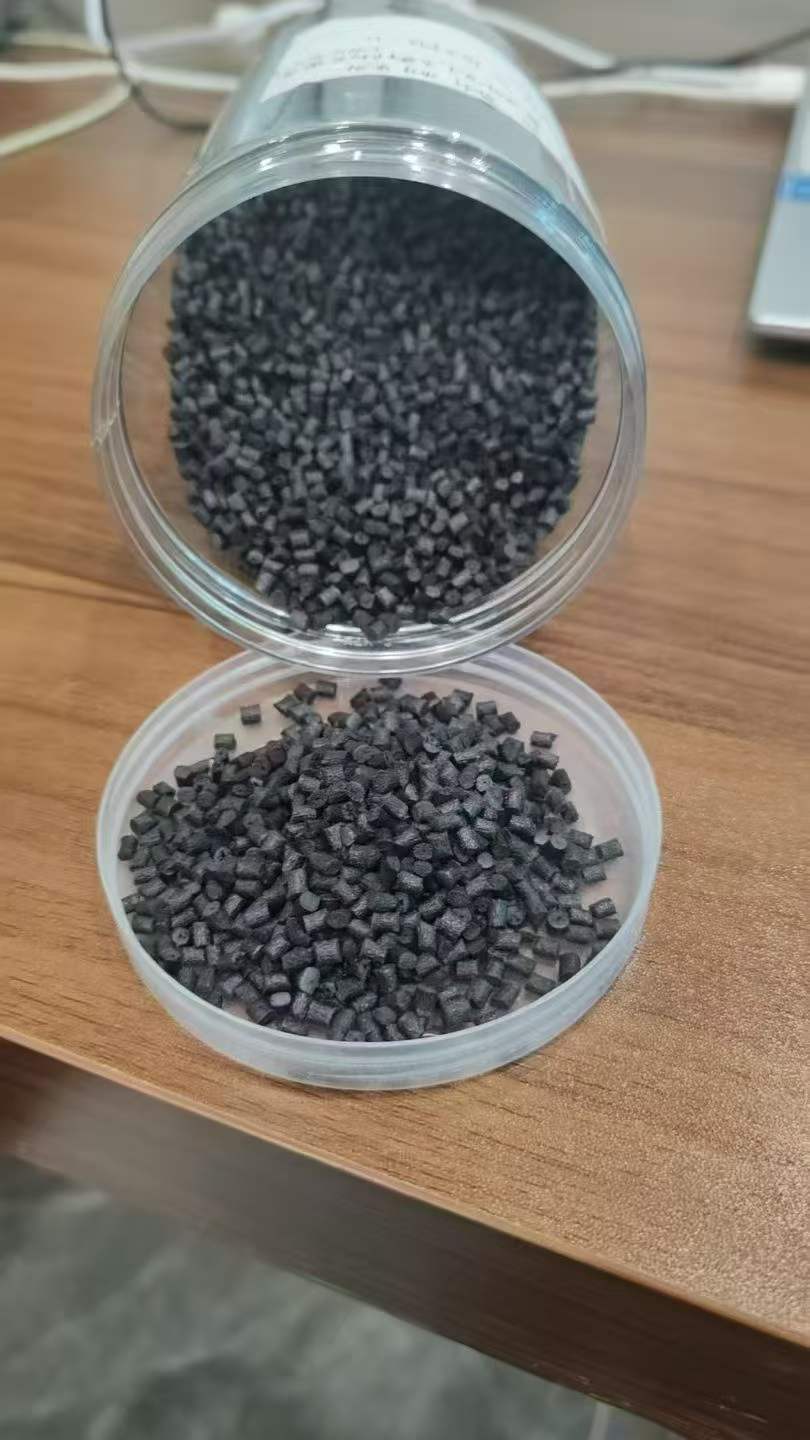
Introduction: Why Choose 40% Glass Fiber Reinforced Nylon?
When a plastic component fails under load, many engineers try to increase wall thickness. However, thicker walls often increase material costs, extend injection molding cycles, and create new problems such as sink marks and internal stress.
A more efficient solution is upgrading to 40% glass fiber reinforced nylon (PA6 GF40 / PA66 GF40).
With higher stiffness, better dimensional stability, and improved creep resistance, GF40 nylon is widely used for structural plastic components that require metal-like performance while maintaining lightweight advantages.
This guide explains how to select the right 40% glass filled nylon grade, optimize injection molding parameters, and prevent common issues such as fiber exposure, warpage, and mold wear.
What Does 40% Glass Fiber Reinforced Nylon Mean?
The "40%" refers to the glass fiber content by weight. The compound contains approximately 40% E-glass fiber and 60% nylon resin.
However, glass fiber content alone does not determine final performance. Three factors have a major influence:
| Factor | Why It Matters |
|---|---|
| Fiber length | Longer retained fibers improve stiffness, strength and impact resistance |
| Fiber orientation | Mechanical properties vary depending on flow direction and molding design |
| Fiber-matrix bonding | Proper sizing and coupling agents improve strength and prevent brittleness |
For standard short-fiber compounds, retained fiber length is usually around 0.2–0.4 mm after injection molding. Long fiber thermoplastic (LFT) grades can retain fibers around 1–3 mm, providing better impact and creep performance.
PA6 GF40 vs PA66 GF40 Material Properties
The following values are typical ranges for general-purpose grades. Actual performance depends on the specific supplier formulation and processing conditions.
| Property | PA6 GF40 | PA66 GF40 | Test Method |
|---|---|---|---|
| Tensile Strength | 180–200 MPa | 190–215 MPa | ISO 527 |
| Flexural Modulus | 10–12 GPa | 11–13.5 GPa | ISO 178 |
| Notched Charpy Impact | 10–16 kJ/m² | 9–14 kJ/m² | ISO 179 |
| Elongation at Break | 2.5–4% | 2.5–4% | ISO 527 |
| HDT (1.8 MPa) | 205–215°C | 245–255°C | ISO 75 |
| Melt Temperature | 250–280°C | 285–305°C | — |
| Density | 1.44–1.48 g/cm³ | 1.45–1.50 g/cm³ | ISO 1183 |
Important note: Nylon is hygroscopic and absorbs moisture from the environment. Conditioned nylon parts may lose approximately 25–35% of their dry stiffness while gaining impact resistance.
For safety-critical components, always evaluate performance under actual operating humidity and temperature conditions.
How to Select the Right 40% Glass Fiber Nylon Grade
1. PA6 GF40 vs PA66 GF40
PA66 GF40
PA66 GF40 is preferred for applications requiring:
- Higher heat resistance
- Better creep resistance
- Higher dimensional stability
- Long-term mechanical performance
Typical applications:
- Automotive brackets
- Industrial structural components
- Electrical connectors
- High-temperature mechanical parts
PA6 GF40
PA6 GF40 offers:
- Better flow performance
- Easier injection molding
- Better surface appearance
- Lower material cost
It is suitable for:
- General structural parts
- Housing components
- Industrial plastic parts
Selection rule:
If continuous working temperature exceeds approximately 120°C, PA66 GF40 is usually the preferred choice.
For lower temperature applications where cost and appearance are important, PA6 GF40 can be a better option.
Standard GF40 Nylon vs Long Fiber Nylon (LFT)
Not all 40% glass fiber reinforced nylon materials perform the same.
Short Fiber GF40 Nylon
Advantages:
- Better injection molding performance
- Lower material cost
- Suitable for standard structural parts
Applications:
- Brackets
- Housings
- Mechanical supports
Long Fiber Thermoplastic Nylon (LFT)
Advantages:
- Higher impact strength
- Better creep resistance
- Improved fatigue performance
LFT nylon can provide approximately 20–35% higher impact performance compared with standard short-fiber compounds.
Recommended for:
- Heavy load components
- Shock-resistant parts
- Automotive structural applications
Common 40% Glass Fiber Nylon Grade Options
Different additives create different performance characteristics.
| Grade Type | Main Benefit | Typical Applications |
|---|---|---|
| Heat Stabilized Nylon | Improved high-temperature aging resistance | Automotive engine parts |
| Hydrolysis Resistant Nylon | Better water and coolant resistance | Pumps, cooling systems |
| Wear Resistant Nylon | Reduced friction and improved wear life | Gears, bearings, sliding parts |
| Low Warp Nylon | Reduced deformation | Large flat components |
| Flame Retardant Nylon | UL94 V-0 flame resistance | Electrical and EV components |
| UV Stabilized Nylon | Better outdoor durability | Outdoor equipment |
Injection Molding Process of 40% Glass Fiber Reinforced Nylon
1. Material Drying
Nylon must be properly dried before injection molding.
Recommended conditions:
- Drying temperature: 80°C
- Drying time: 4–6 hours
- Dryer type: Dehumidifying dryer
- Target moisture content: Below 0.15%
Poor drying can cause:
- Reduced molecular weight
- Brittle parts
- Silver streaks
- Poor mechanical properties
2. Melt Temperature
Recommended processing range:
| Material | Melt Temperature |
|---|---|
| PA6 GF40 | 250–280°C |
| PA66 GF40 | 285–305°C |
Avoid excessive temperature or residence time, which may cause:
- Material degradation
- Brown marks
- Reduced strength
3. Mold Temperature
Recommended mold temperature:
80–120°C
For better surface appearance:
120–140°C
Higher mold temperatures help create a resin-rich surface layer, reducing:
- Fiber exposure
- Rough surface
- Glass fiber floating
4. Screw and Barrel Requirements
40% glass fiber nylon is highly abrasive.
Recommended:
- Wear-resistant screw and barrel
- Hardened components
- Compression ratio: 2.0–2.5
- Moderate screw speed: 50–100 rpm
- Low back pressure: 0.3–0.7 MPa
Regular inspection of screw components is necessary for stable production.
Common Injection Molding Defects and Solutions
| Defect | Cause | Solution |
|---|---|---|
| Fiber exposure | Low mold temperature, slow filling | Increase mold temperature and injection speed |
| Warpage | Uneven cooling and fiber orientation | Optimize gate location and cooling system |
| Short shot | Small gate or poor venting | Increase gate size and improve ventilation |
| Weak weld line | Poor fiber distribution | Adjust gate position and molding conditions |
| Brittle parts | Moisture or overheating | Improve drying and temperature control |
| Flash | Excessive pressure or worn gate | Repair mold and optimize pressure |
Mold Design Recommendations for GF40 Nylon
Because glass fiber is abrasive, mold materials must have good wear resistance.
Recommended:
- Hardened tool steel
- H13 / 1.2344 steel
- 1.2379 steel for high-wear areas
Design guidelines:
- Wall thickness: 2–4 mm
- Rib thickness: 50–60% of wall thickness
- Avoid extremely thin walls below 1.5 mm
- Use generous corner radii
- Design ribs according to load direction
For precision parts, Moldflow analysis is recommended to predict:
- Fiber orientation
- Shrinkage difference
- Warpage risk
Applications of 40% Glass Fiber Reinforced Nylon
40% glass filled nylon is widely used for high-performance plastic components:
- Ergonomic chair structural parts
- Automotive brackets
- Electrical connectors
- EV charging components
- Power tool housings
- Industrial gears
- Pump components
- Mechanical support structures
It is an excellent material choice when traditional nylon grades cannot provide enough stiffness or dimensional stability.
FAQ About 40% Glass Fiber Reinforced Nylon
Is PA66 GF40 stronger than PA66 GF30?
Yes. PA66 GF40 provides higher stiffness and better creep resistance than PA66 GF30.
However, higher glass fiber content may also result in:
- Lower impact resistance
- Rougher surface appearance
- Higher mold wear
The correct choice depends on the actual failure mode of the component.
Can 40% glass fiber nylon replace metal parts?
In many applications, yes.
PA66 GF40 can replace aluminum or metal components where lightweight design, corrosion resistance and production efficiency are required.
How much recycled material can be added?
Normally, 15–25% regrind can be considered if properly dried.
Higher recycled content may reduce:
- Fiber length
- Impact strength
- Dimensional stability
Conclusion
Selecting the right 40% glass fiber reinforced nylon requires more than choosing a higher glass fiber percentage.
Engineers should consider:
- Base resin: PA6 or PA66
- Fiber type: short fiber or long fiber
- Additive requirements
- Working environment
- Injection molding conditions
With proper material selection and optimized processing, PA66 GF40 and PA6 GF40 can deliver high stiffness, excellent dimensional stability and reliable performance for demanding plastic components.
Techinherit provides customized glass fiber reinforced nylon solutions, including material selection, modified nylon compounds, injection molding support and production validation. Contact our engineering team for professional material recommendations and trial support.
Request a Free Design Review
Looking to reduce the cost of your next plastic injection molding project? Contact our engineering team today for a free consultation.
