
Why Do Nylon Injection Molded Parts Become Brittle in Winter? Material Causes and Solutions
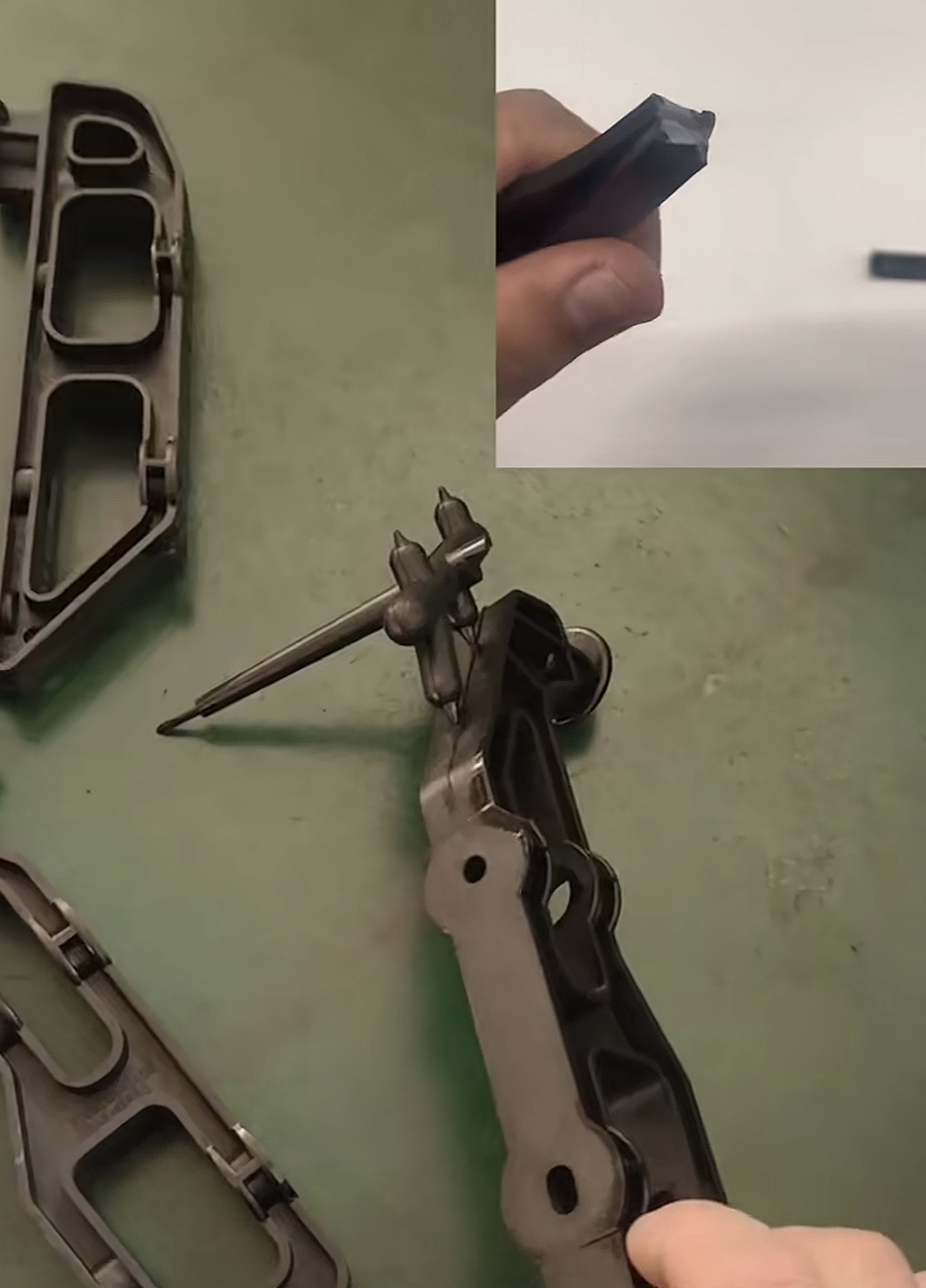
Nylon is widely used for injection molded structural parts because of its high strength, good wear resistance, toughness, and excellent processability. However, some nylon injection molded parts that perform well during normal temperatures may become noticeably more brittle in winter or low-temperature environments.
Cracks, edge breakage, impact failure, and sudden fracture are common symptoms.
While injection molding conditions can contribute to the problem, material selection and material formulation are often the key factors determining the low-temperature performance of nylon parts.
This article explains why nylon becomes brittle in cold conditions and how to improve winter performance through material selection, modification, reinforcement, and moisture management.
1. Why Does Nylon Become Brittle at Low Temperatures?
Nylon is a semi-crystalline engineering thermoplastic. Its mechanical properties are affected by temperature, moisture content, crystallinity, reinforcement, and polymer formulation.
As temperature decreases, molecular chain movement becomes more restricted.
At room temperature, nylon can absorb impact energy through molecular-chain movement and deformation. At low temperatures, this molecular mobility decreases, making the material less capable of absorbing impact energy.
As a result, a nylon component that is normally tough may become more susceptible to:
- Impact cracking
- Brittle fracture
- Edge chipping
- Snap failure
- Stress cracking
- Sudden breakage under load
Therefore, a nylon grade suitable for normal indoor temperatures is not necessarily suitable for outdoor winter applications.
2. Nylon Moisture Content Has a Major Influence on Toughness
One of the most important material-related factors is moisture absorption.
Nylon, especially PA6 and PA66, is hygroscopic. It naturally absorbs moisture from the surrounding environment.
Moisture acts as a plasticizer for nylon.
When nylon contains an appropriate amount of moisture, its molecular chains have greater mobility, which generally improves:
- Impact strength
- Elongation
- Toughness
- Resistance to sudden fracture
When nylon becomes too dry, it can become significantly harder and more brittle.
This creates an important situation:
A nylon part can become brittle not only because the temperature is low, but also because its moisture content has changed.
For example, a PA6 component may perform well after conditioning but become noticeably more brittle after being stored in a dry environment.
This is particularly important for products shipped from a humid manufacturing environment to a cold and dry region.
3. PA6 and PA66 Can Behave Differently in Cold Conditions
Material selection should start with the specific nylon type.
PA6
PA6 generally offers:
- Good toughness
- Good impact resistance
- Good processing characteristics
- Relatively high moisture absorption
- Good wear resistance
Its moisture absorption can contribute to good toughness after conditioning.
PA66
PA66 generally provides:
- Higher heat resistance
- Higher stiffness
- Good mechanical strength
- Good dimensional stability compared with PA6
- Excellent performance for structural applications
However, depending on the formulation, reinforcement level, and moisture condition, PA66 can also become relatively brittle at low temperatures.
Therefore, simply changing from PA6 to PA66 does not automatically solve a winter brittleness problem.
The complete material formulation needs to be evaluated.
4. Glass Fiber Can Increase Strength but May Reduce Low-Temperature Toughness
Glass-fiber-reinforced nylon is widely used for structural components.
Common grades include:
- PA6 GF15
- PA6 GF30
- PA66 GF30
- PA66 GF40
- PA66 GF50
Glass fiber can significantly improve:
- Tensile strength
- Flexural strength
- Stiffness
- Heat resistance
- Dimensional stability
However, higher glass-fiber loading does not always mean better impact performance.
For example, increasing glass fiber from 30% to 40% or 50% can make a component significantly stiffer, but the material may become less tolerant of impact or sharp stress concentrations, particularly under low-temperature conditions.
This is why a material designed primarily for high stiffness may not be suitable for a component that experiences repeated impact in winter.
The right balance between strength, stiffness and toughness is more important than simply increasing the glass-fiber percentage.
5. The Difference Between Standard Nylon and Toughened Nylon
If a nylon component needs to withstand impact at low temperatures, a toughened nylon formulation may be more appropriate than a standard nylon grade.
Toughened nylon typically uses impact-modifying components to improve the material’s ability to absorb energy.
Compared with standard nylon, a properly formulated toughened grade can provide better:
- Low-temperature impact resistance
- Crack resistance
- Elongation
- Drop resistance
- Resistance to sudden fracture
This can be especially useful for:
- Outdoor equipment
- Automotive components
- Power-tool housings
- Sports equipment
- Cable management products
- Industrial components
- Chair structural parts
- Mechanical brackets
- Connectors and housings
When the product will be used outdoors during winter, low-temperature impact performance should be included in the material specification from the beginning.
6. Low-Temperature Toughness Depends on the Complete Material Formula
A nylon material is not simply “PA6” or “PA66.”
Two materials with the same basic polymer type can have very different performance because of differences in formulation.
Important factors include:
Base polymer
The molecular structure and molecular weight of the nylon influence strength, toughness and processing behavior.
Glass fiber content
Higher glass-fiber content generally increases stiffness and strength but can influence impact toughness.
Impact modifier
A suitable impact modifier can improve low-temperature toughness and crack resistance.
Plasticization and moisture
Moisture content can strongly affect nylon flexibility and impact behavior.
Heat stabilizer
Heat stabilizers help protect the polymer during high-temperature processing and long-term use.
Lubricants and processing additives
These can affect processing, fiber dispersion and the final mechanical properties.
Flame retardants
Some flame-retardant systems can affect toughness and impact performance. Therefore, a flame-retardant nylon should not be evaluated only by its V-0 rating.
The entire formulation must be considered.
7. Flame-Retardant Nylon May Need Additional Toughness Optimization
For applications requiring both flame resistance and mechanical strength, material selection becomes more complicated.
For example, an electrical connector may require:
- PA66 base resin
- Glass-fiber reinforcement
- Flame retardancy
- High-temperature resistance
- Dimensional stability
- Low-temperature impact resistance
Some flame-retardant systems can make nylon relatively rigid or reduce elongation.
Therefore, if the product is experiencing winter cracking, it is worth evaluating whether the existing flame-retardant formulation provides sufficient impact performance.
A customized flame-retardant + toughened nylon formulation may be more appropriate than simply increasing the glass-fiber content.
8. Recycled Material Can Also Affect Winter Performance
Material recycling is another factor that should not be overlooked.
Repeated thermal processing can cause polymer degradation.
If excessive recycled material or improperly controlled regrind is used, the final nylon may show reduced:
- Molecular weight
- Elongation
- Impact strength
- Fatigue resistance
- Low-temperature toughness
This can become more obvious in winter.
For critical structural components, material suppliers should control recycled content and maintain consistent raw-material quality.
9. Drying Conditions Matter for Nylon
Before injection molding, nylon normally requires proper drying.
However, over-drying can also influence final part performance because nylon’s moisture content directly affects toughness.
The objective is not simply to make the material “as dry as possible.”
The goal is to achieve a controlled and appropriate moisture condition for the selected nylon grade and molding process.
After molding, the part may absorb moisture from the surrounding environment and its mechanical properties can change accordingly.
For products used in cold and dry climates, material conditioning should therefore be considered during product validation.
10. How to Improve the Low-Temperature Performance of Nylon Parts
If a nylon injection molded part becomes brittle during winter, the following material-related solutions can be evaluated.
Solution 1: Select a low-temperature toughened nylon
For applications involving impact or outdoor use, choose a nylon grade specifically designed for low-temperature toughness.
This is often more effective than simply changing molding parameters.
Solution 2: Optimize the glass-fiber content
If the existing material contains a high percentage of glass fiber, evaluate whether the reinforcement level is higher than necessary.
A lower glass-fiber formulation may provide a better balance between stiffness and toughness.
Solution 3: Use impact-modified nylon
For products exposed to impact, consider PA6 or PA66 with an appropriate impact-modification system.
The target should be a balance between:
Strength + stiffness + toughness + low-temperature impact resistance.
Solution 4: Optimize moisture conditioning
Control the material’s moisture content before molding and evaluate the finished part under realistic environmental conditions.
Testing only dry samples may not accurately represent actual product performance.
Solution 5: Evaluate the complete formulation
If the product requires flame retardancy, UV resistance, heat resistance, glass fiber, or other special properties, these additives should be considered together.
Changing one additive can affect other mechanical properties.
11. How Should Low-Temperature Nylon Be Tested?
For products intended for winter or outdoor applications, room-temperature testing alone is insufficient.
A material evaluation program can include:
- Tensile strength testing
- Elongation testing
- Notched impact testing
- Low-temperature impact testing
- Drop testing
- Environmental conditioning
- Thermal aging
- Moisture conditioning
- Dimensional stability testing
For example, a product intended for outdoor use may be tested at:
23°C → 0°C → -10°C → -20°C
The actual testing temperature should be determined according to the product’s intended service environment.
The objective is to determine whether the material maintains sufficient toughness as temperature decreases.
12. Material Selection Should Be Based on the Final Application
There is no single nylon material that is ideal for every application.
For example:
|
Application |
Possible Material Direction |
|
General structural parts |
PA6 / PA66 |
|
High stiffness parts |
PA6 GF30 / PA66 GF30 |
|
High-load structural parts |
PA66 GF40 / GF50 |
|
Outdoor components |
UV-resistant + toughened nylon |
|
Cold-weather applications |
Low-temperature toughened nylon |
|
Flame-retardant components |
Flame-retardant PA6/PA66 with toughness optimization |
|
High-impact components |
Impact-modified nylon |
|
Precision components |
Low-warpage reinforced nylon |
The final material should be selected according to the actual requirements for temperature, load, impact, humidity, chemical exposure and service life.
Conclusion
When nylon injection molded parts become brittle in winter, the problem is not necessarily caused by the injection molding machine or processing parameters.
Material formulation and environmental conditions are often major factors.
For PA6 and PA66, moisture content, polymer structure, glass-fiber loading, impact modifiers, flame-retardant systems, stabilizers and recycled material content can all influence low-temperature performance.
For demanding applications, the goal should not simply be to choose the strongest or highest-glass-fiber nylon.
Instead, the material should be engineered to achieve the right balance of:
Strength + stiffness + toughness + low-temperature impact resistance + dimensional stability.
At Techinherit, we provide plastic material selection and injection molding solutions for engineering plastic components. Based on the product structure, operating temperature, mechanical requirements and application environment, we can help evaluate suitable PA6, PA66, glass-fiber-reinforced nylon, toughened nylon and customized material formulations.
Request a Free Design Review
Looking to reduce the cost of your next plastic injection molding project? Contact our engineering team today for a free consultation.
