
Paint-Free Injection Molding: Plastic Parts Without Spray Painting
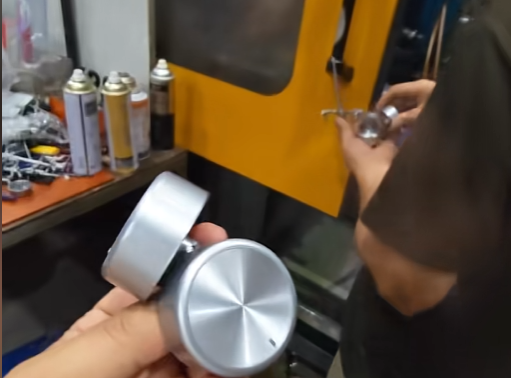
In many plastic manufacturing projects, achieving an attractive surface finish traditionally requires a secondary process such as spray painting, coating, plating or other surface treatments.
However, some customers are looking for a different solution: plastic parts that achieve the required color, gloss or metallic appearance directly during injection molding, without conventional spray painting after molding.
This is where paint-free injection molding can provide an alternative manufacturing solution.
At Techinherit, we develop injection molding solutions that combine material formulation, mold surface design and injection process optimization to help customers produce plastic components with high-quality surface appearance directly after molding.
The goal is not simply to eliminate a painting step. It is to develop the right combination of plastic material + mold + processing conditions for the customer\\\\\\\\\\\\\\\'s required appearance and application.
What Is Paint-Free Injection Molding?
Paint-free injection molding, also known as paintless injection molding, refers to a manufacturing approach in which the desired appearance of a plastic component is achieved during the injection molding process rather than relying on conventional post-molding spray painting.
Depending on the application, the final surface can be designed to provide:
- Metallic appearance
- High-gloss appearance
- Matte appearance
- Customized colors
- Smooth decorative surfaces
- Special visual effects
- Consistent surface texture
Traditional manufacturing may follow this route:
Plastic material → Injection molding → Surface preparation → Primer → Spray painting → Drying → Inspection
A paint-free solution aims to simplify the process:
Specialized plastic material → Injection molding → Inspection → Finished plastic part
Metallic effects can also be incorporated directly into thermoplastic materials, although material selection and processing conditions have a significant influence on the final appearance. Research and industrial development continue to focus on reducing flow-line visibility in metallic-effect injection molded parts.
Why Are Customers Looking for Paint-Free Plastic Parts?
For many products, spray painting is used primarily to improve appearance rather than provide the basic structural function of the component.
This additional process can introduce extra manufacturing steps.
For example:
Injection molding → Cleaning → Painting → Drying → Inspection → Packaging
Each additional step can affect production management, cycle time, quality control and manufacturing cost.
A paint-free injection molding solution can potentially reduce the number of secondary operations and simplify the production flow.
Potential advantages include:
1. Fewer secondary processes
The finished appearance is developed during injection molding instead of depending entirely on post-molding painting.
2. Reduced handling
The molded part may require less handling between molding and final inspection.
3. More integrated manufacturing
Material selection, mold design and surface appearance can be considered together from the beginning of the project.
4. Consistent production process
Instead of relying on multiple coating parameters, the appearance can be controlled through material formulation, mold design and injection parameters.
5. Suitable for high-volume production
When the material and molding process have been properly validated, paint-free molding can be integrated into continuous injection production.
The exact economic and quality benefits depend on the part geometry, material, appearance requirements, production volume and existing painting process. Paint and coating processes remain appropriate for many applications, so paint-free molding should be evaluated on a project-by-project basis.
How Does Paint-Free Injection Molding Work?
A successful paint-free injection molded part is not created by simply changing the color of ordinary plastic.
Several technical factors need to work together.
1. Material Formulation
The plastic material is one of the most important factors.
For decorative or metallic-looking parts, the formulation may incorporate specific pigments or effect additives to achieve the required visual effect.
Different materials can provide different combinations of:
- Gloss
- Color
- Surface appearance
- Mechanical strength
- Heat resistance
- UV resistance
- Dimensional stability
For example, depending on the application, materials such as ABS, PC, PC/ABS, PP, POM or engineering plastics may be considered.
However, the most suitable material should be selected according to the actual product requirements rather than appearance alone.
2. Mold Surface Design
The mold surface directly influences the final surface of the injection molded part.
For high-gloss or decorative components, the mold needs to be manufactured and polished according to the required surface standard.
For some applications, mold texture can also be used to create a specific visual or tactile effect.
This means that paint-free injection molding should be considered during the mold design stage, rather than after the mold has already been completed.
A properly designed gate, runner system, cooling system and cavity surface can help improve the consistency of the final appearance.
3. Injection Molding Process Control
Even with a suitable material and high-quality mold, poor injection parameters can cause visible surface defects.
Important parameters may include:
- Melt temperature
- Mold temperature
- Injection speed
- Injection pressure
- Holding pressure
- Holding time
- Cooling time
- Screw speed
- Back pressure
For decorative parts, the relationship between material flow and surface appearance is particularly important.
Metallic pigments or effect additives can become oriented during melt flow, potentially producing visible flow marks or differences in appearance.
Therefore, injection molding process optimization is an important part of paint-free molding development.
How Do We Achieve a Metallic Appearance Without Spray Painting?
One of the most interesting applications of paint-free injection molding is metallic-looking plastic parts.
Traditional production may use:
Injection molding → Primer → Metallic paint → Protective coating
An alternative approach is to develop the metallic effect directly within the plastic material and molding process.
Metallic-effect pigments can create reflective visual effects within thermoplastic materials. Industrial research has demonstrated that metallic appearance can be produced during injection molding without an additional coating step.
However, metallic injection molding also creates technical challenges.
For example:
- Flow lines
- Weld lines
- Pigment orientation
- Uneven gloss
- Color variation
- Gate marks
- Surface waviness
Therefore, material selection alone is not enough.
The material, mold structure and injection parameters need to be optimized together.
Paint-Free Injection Molding vs. Traditional Spray Painting
Contact Techinherit to discuss your plastic part, material and surface finish requirements.
Request a Free Design Review
Looking to reduce the cost of your next plastic injection molding project? Contact our engineering team today for a free consultation.
