
Why Do Medical Equipment Housings Crack After Repeated Disinfection?
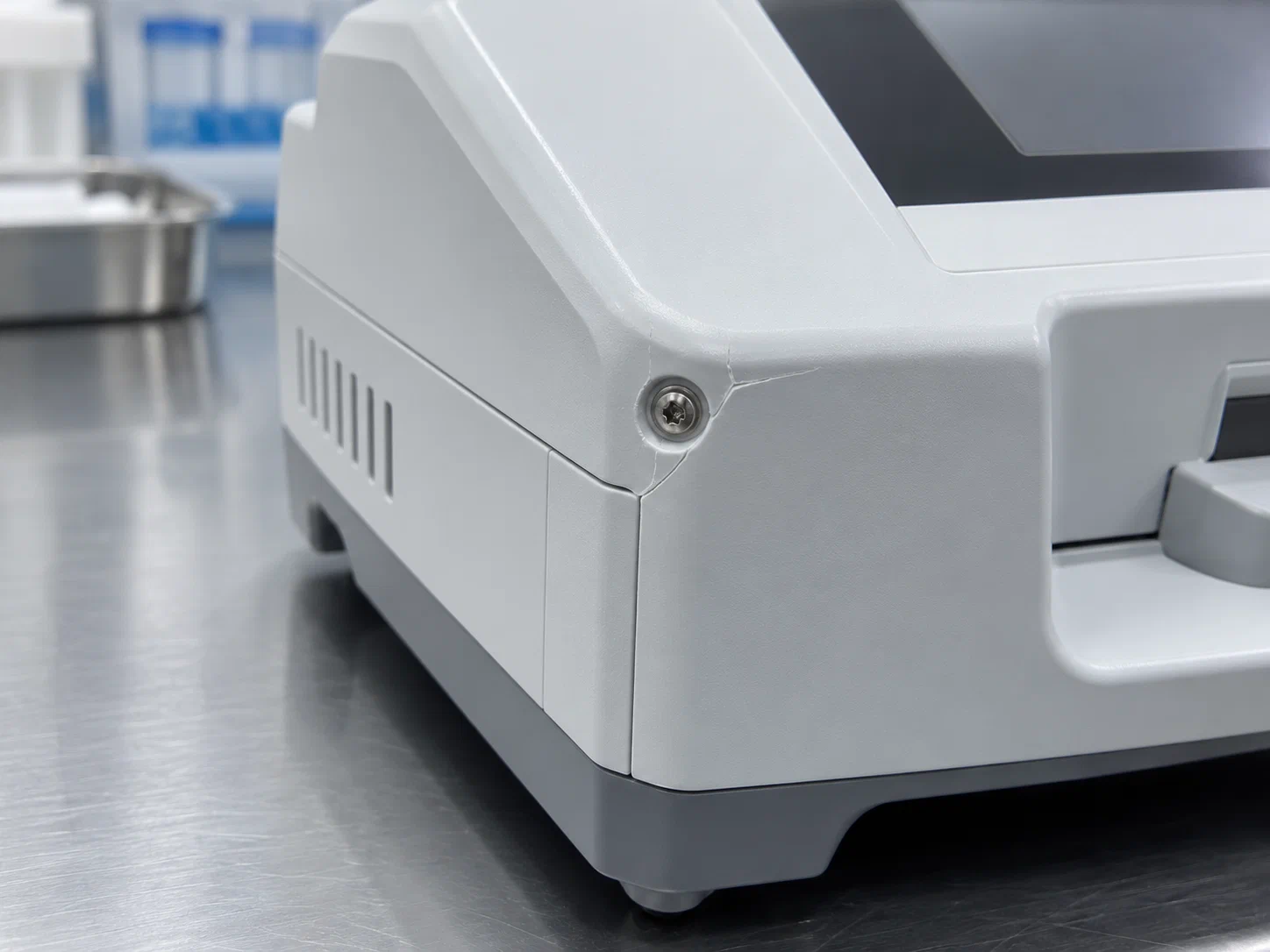
Plastic housings used in portable diagnostic devices, medical testing instruments, and hospital electronic equipment must meet more than mechanical strength and appearance requirements. They are also exposed to repeated cleaning and disinfection throughout their service life. Some PC or ABS housings perform well during initial drop and assembly testing but begin to develop fine cracks around screw bosses, snap-fits, or structural corners after repeated disinfectant wiping. These failures may initially appear as surface whitening or minor crazing before developing into more serious cracks. For medical equipment manufacturers, the challenge is that the product may show no obvious problems during conventional outgoing inspection.
The underlying cause is not always insufficient material strength. In many cases, the problem involves environmental stress cracking (ESC), where chemical exposure and mechanical stress act together to damage the polymer. PC offers good impact strength and heat resistance, while ABS provides good processability and surface appearance. However, resistance to alcohol-based cleaners, quaternary ammonium disinfectants, and other cleaning chemicals varies significantly between material grades. Under certain chemical conditions, cracks can develop at relatively low applied stress levels, particularly in areas with high residual molding stress or concentrated assembly loads.
Consider a typical engineering scenario involving a portable medical testing device with a PC housing. The enclosure passes its initial mechanical tests, but fine cracks gradually appear around the screw mounting points during repeated disinfectant wiping tests. Replacing the material with a higher-strength PC grade may seem like a logical improvement, yet it does not necessarily address the actual failure mechanism. The disinfectant formulation, concentration, exposure time, screw-tightening stress, and residual stress introduced during injection molding all need to be examined. The location and appearance of the cracks can provide useful information about whether chemical compatibility, structural design, or processing conditions are contributing to the failure.
Material selection should therefore be based on the cleaning environment rather than mechanical strength alone. For PC and ABS housings, different grades should be evaluated for environmental stress cracking resistance against the specified disinfectants. A material with higher impact strength is not automatically more resistant to chemical exposure. For certain non-transparent structural components with demanding chemical resistance requirements, engineering plastics such as PBT may also be considered, although hydrolysis resistance, mechanical properties, molding shrinkage, and compatibility with the actual disinfectants must be verified. The final material must also meet the regulatory, quality, and safety requirements applicable to the intended medical equipment.
For manufacturers experiencing repeated housing failures, this is where combining material modification with injection molding knowledge becomes valuable. TechInherit can approach the problem by considering material formulation, toughness, processing stability, and chemical compatibility alongside screw boss design, wall-thickness transitions, gate location, and molding conditions. Rather than relying on a material change alone, the objective is to identify which factors contribute to cracking and determine where adjustments are most useful. For an existing product, evaluating the material and molded component together may also help avoid unnecessary tooling changes and repeated material trials.
Validation is equally important. Tensile and impact tests on standard material specimens cannot fully represent how an assembled housing behaves during repeated cleaning. Finished components should be evaluated under conditions that reflect the intended disinfectant, wiping frequency, exposure duration, and assembly stress. Crack formation, surface changes, and mechanical performance after exposure should all be assessed according to the product requirements. A material that performs well during initial testing may still be unsuitable when chemical exposure and mechanical stress occur together over time.
For medical equipment manufacturers, housing durability is not determined by initial strength or material cost alone. Chemical compatibility, component geometry, and molding stress must be evaluated as part of the same engineering problem. Addressing these factors during development can help reduce premature cracking, unnecessary redesign, and long-term product maintenance costs.
Request a Free Design Review
Looking to reduce the cost of your next plastic injection molding project? Contact our engineering team today for a free consultation.
