
Tesla's New Roadster Puts Automotive Engineering in the Spotlight
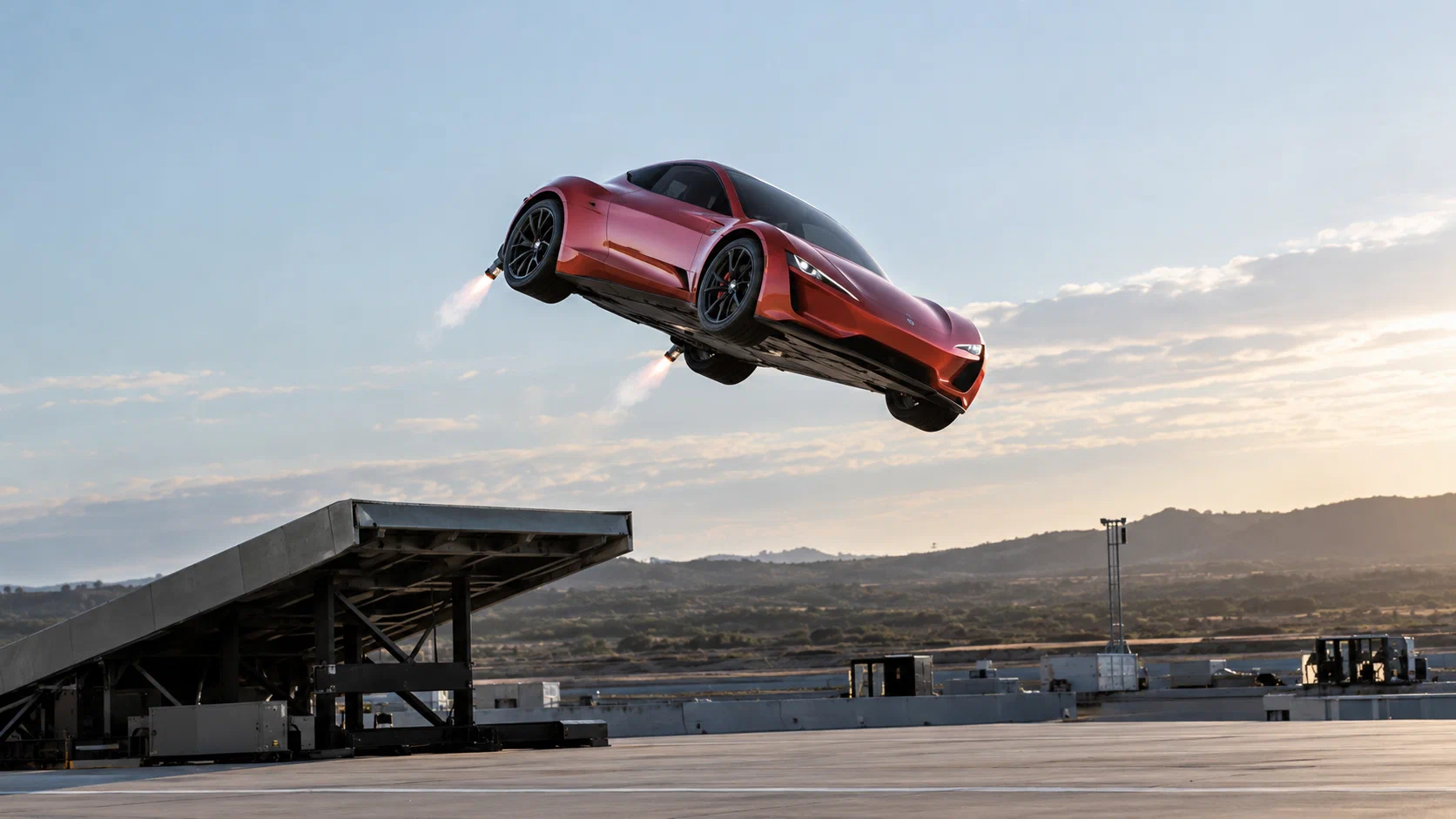
On October 15, Tesla unveiled its next-generation Roadster in Texas. The electric sports car features a cold-gas thruster system developed in collaboration with SpaceX, and the demonstration included unusual maneuvers such as mid-air rotation. Tesla said production is planned for 2028, meaning the vehicle is still some time away from mass production. Since the next-generation Roadster was first announced in 2017, its production schedule has been revised several times. The latest reveal provides a look at Tesla's vision for a high-performance vehicle. (Reuters)
High-performance vehicles attract attention not only for their acceleration or special features, but also because their design can place demanding requirements on individual components. Lightweighting remains an important objective in automotive engineering, but reducing weight cannot come at the expense of strength, heat resistance or service life. For components suited to plastic construction, material selection needs to reflect actual loads, operating temperatures, available space and assembly requirements. Plastic is not automatically the better option simply because it is lighter than metal.
How Engineering Plastics Affect Component Design and Manufacturing
PA6, PA66 and glass-fiber-reinforced nylon are already used in selected automotive brackets, housings and structural components. Glass fiber improves stiffness and strength, but it also affects melt flow, shrinkage and warpage. PA66 GF30, for example, can provide useful stiffness for many structural parts. However, uneven wall thickness, complex geometry or an unsuitable cooling layout can still lead to deformation and dimensional variation. Meeting the required material properties on paper does not guarantee consistent results during injection molding.
This is why material selection needs to be considered alongside product design and mold development. If a plastic bracket develops warpage, the cause may involve material shrinkage, fiber orientation, part geometry or cooling conditions. Simply switching to a higher-grade material may not solve the problem. Evaluating flow behavior, glass-fiber content, wall thickness and mold design during development can make it easier to identify the right adjustments and avoid repeated mold trials later.
The same principle applies to components already in production. Some parts use relatively expensive engineering plastics even though their actual performance requirements may not justify the full material specification. Others experience unstable molding or excessive rejects because the material does not match the part design. In these situations, reviewing the formulation, reinforcement level and processing conditions can be more useful than simply choosing a higher specification or negotiating a lower resin price. TechInherit's material modification and injection molding capabilities can be brought together in this type of project, linking material selection with how the finished component will actually be molded rather than evaluating resin cost in isolation.
Ultimately, automotive component performance depends on how well the material works in the finished part. A suitable material must deliver the required properties while remaining compatible with the component geometry, tooling and production process. As electric vehicles continue to evolve, manufacturing approaches that connect material performance with product design and injection molding will remain an important part of automotive component development.
Request a Free Design Review
Looking to reduce the cost of your next plastic injection molding project? Contact our engineering team today for a free consultation.
