
How Nylon Modification Creates Stronger and More Reliable Plastic Components
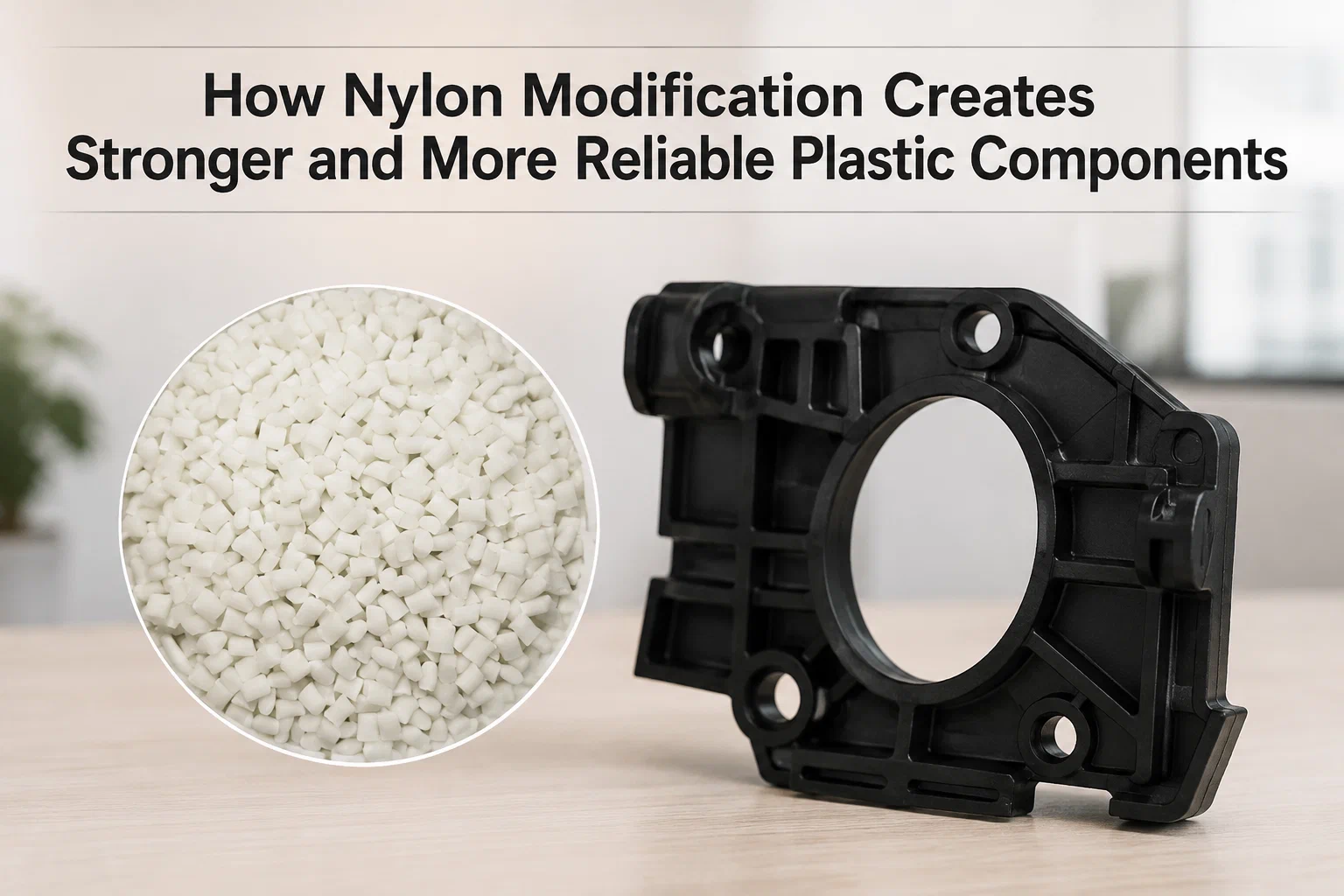
Nylon materials have become widely used in engineering plastic applications due to their excellent mechanical properties, good processing performance, and balanced cost advantages. However, standard nylon materials may not always satisfy the increasing performance requirements of modern plastic components. When products require higher strength, better impact resistance, improved durability, or special functional properties, nylon modification becomes an effective solution.
Nylon modification refers to the process of improving the performance of nylon materials by adjusting polymer structures, adding reinforcing materials, or introducing functional additives. Through advanced modification technologies, manufacturers can optimize nylon properties and create materials that are more suitable for demanding plastic component applications.
One of the main advantages of nylon modification is improving mechanical strength. Standard nylon provides good strength for many applications, but some structural components require higher load-bearing capability and better resistance to external forces. By adding reinforcing materials such as glass fibers, modified nylon materials can achieve improved stiffness and strength. PA6 GF and PA66 GF materials are commonly used for components that require enhanced mechanical performance and dimensional stability.
Toughness improvement is another important purpose of nylon modification. Although nylon offers good overall performance, certain environments may cause plastic parts to become brittle, especially under impact or low-temperature conditions. Toughened nylon materials are developed by adding impact modifiers to improve flexibility and impact resistance. This helps reduce cracking risks and increases the service life of plastic components.
Heat resistance is also a key factor in engineering plastic applications. Some plastic components operate in environments with continuous temperature changes or elevated temperatures. Modified nylon materials with improved thermal stability can maintain better mechanical performance under higher temperature conditions, helping products achieve more reliable long-term operation.
In addition to strength and durability improvements, nylon modification can also enhance dimensional stability. During injection molding production, material shrinkage and internal stress may affect the accuracy of plastic components. Modified nylon materials can be optimized to reduce deformation, improve consistency, and support precision manufacturing requirements.
Different product requirements often require different nylon modification solutions. For example, glass fiber reinforced nylon is suitable for applications requiring high strength and rigidity, while toughened nylon is designed for products requiring improved impact resistance. Flame retardant nylon can provide better safety performance, and conductive nylon materials can meet requirements for electrical and static control applications.
Material selection is an important step when developing reliable plastic components. Engineers need to consider product structure, working environment, processing conditions, and performance expectations before selecting or developing suitable modified nylon materials. Customized nylon modification allows manufacturers to create materials that match specific application requirements rather than relying only on standard materials.
The combination of nylon modification and injection molding technology also plays an important role in manufacturing quality. A well-developed material formulation must work effectively with molding processes to achieve stable production results. Proper material characteristics help improve processing stability, reduce manufacturing defects, and maintain consistent product performance during mass production.
Customized nylon materials, including modified PA6, PA66, reinforced nylon, and functional nylon solutions, allow companies to solve specific material challenges and achieve better product performance. Through professional material development and engineering support, manufacturers can create plastic components that meet increasingly demanding requirements.
Techinherit provides customized material modification solutions, including PA6 and PA66 modified materials, reinforced nylon, toughened nylon, flame retardant nylon, and other engineering plastic solutions. With material development and manufacturing capabilities, we support customers in creating reliable plastic components with optimized performance.
Request a Free Design Review
Looking to reduce the cost of your next plastic injection molding project? Contact our engineering team today for a free consultation.
