
Why Standard ABS Materials May Need Antistatic Modification
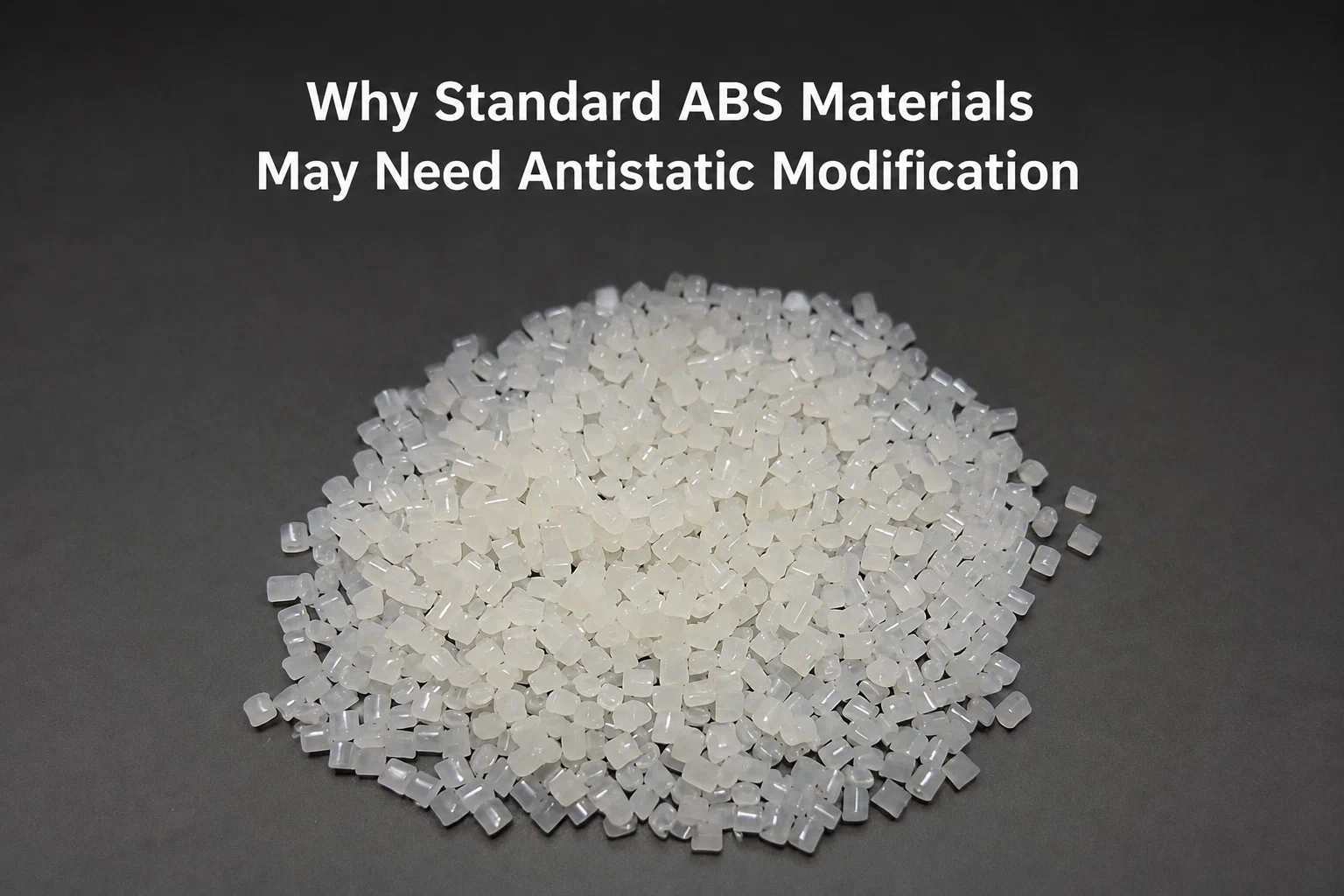
ABS materials are widely used in plastic component manufacturing due to their excellent balance of strength, impact resistance, surface appearance, and processing performance. From consumer products to industrial components, ABS has become one of the most common engineering plastics for applications requiring good overall performance.
However, standard ABS materials also have certain limitations. As an electrical insulating polymer, ABS naturally has high electrical resistance, which means static charges can easily accumulate on the surface of plastic components under certain conditions. For products used in environments where static control is important, traditional ABS materials may not provide sufficient performance.
Antistatic ABS materials are developed through material modification technologies to reduce static electricity accumulation and improve electrical performance. By introducing specific functional additives or modifying the material formulation, manufacturers can adjust the surface resistance of ABS while maintaining its original mechanical properties and processing advantages.
One of the main challenges of standard ABS materials is static charge accumulation during product use or manufacturing processes. When plastic components come into contact with other materials, friction can generate static electricity. If the charge cannot be released effectively, it may attract dust, affect product appearance, or interfere with sensitive components.
Through antistatic modification, ABS materials can achieve better static control performance. The modified material allows electrical charges to dissipate more effectively, reducing the risk of static buildup on the plastic surface. This makes antistatic ABS suitable for applications where cleanliness, reliability, and controlled electrical properties are required.
Material modification methods for antistatic ABS typically involve adding conductive or antistatic agents into the polymer system. These additives create improved charge dissipation pathways within the material, allowing static electricity to be released more efficiently. The selection and amount of additives need to be carefully controlled to balance electrical performance, mechanical properties, appearance, and processing characteristics.
Compared with standard ABS, antistatic ABS provides additional functional advantages while maintaining many of the original benefits of ABS materials. It can still offer good impact resistance, dimensional stability, and injection molding performance, making it suitable for customized plastic component production.
The development of antistatic ABS also requires consideration of product application requirements. Different products may require different levels of static control performance. Engineers need to evaluate factors such as surface resistance, working environment, mechanical requirements, and manufacturing conditions to determine the appropriate material solution.
In addition to antistatic performance, ABS materials can also be modified to achieve other functional properties, including flame retardancy, improved impact resistance, enhanced heat resistance, and better surface performance. This allows manufacturers to develop customized ABS solutions based on specific product requirements.
For plastic component manufacturers, choosing the right material is an important step in improving product reliability. Using standard ABS materials for applications with static control requirements may create potential performance limitations. Customized antistatic ABS materials provide a more suitable approach by combining the advantages of ABS with improved functional properties.
Techinherit provides customized plastic material modification solutions, including antistatic ABS, conductive plastics, modified nylon, reinforced engineering plastics, and other functional material solutions. Through professional material development and manufacturing experience, we help customers create plastic components with optimized performance and reliability.
Request a Free Design Review
Looking to reduce the cost of your next plastic injection molding project? Contact our engineering team today for a free consultation.
