
How Material Modification Creates More Possibilities for Plastic Product Design
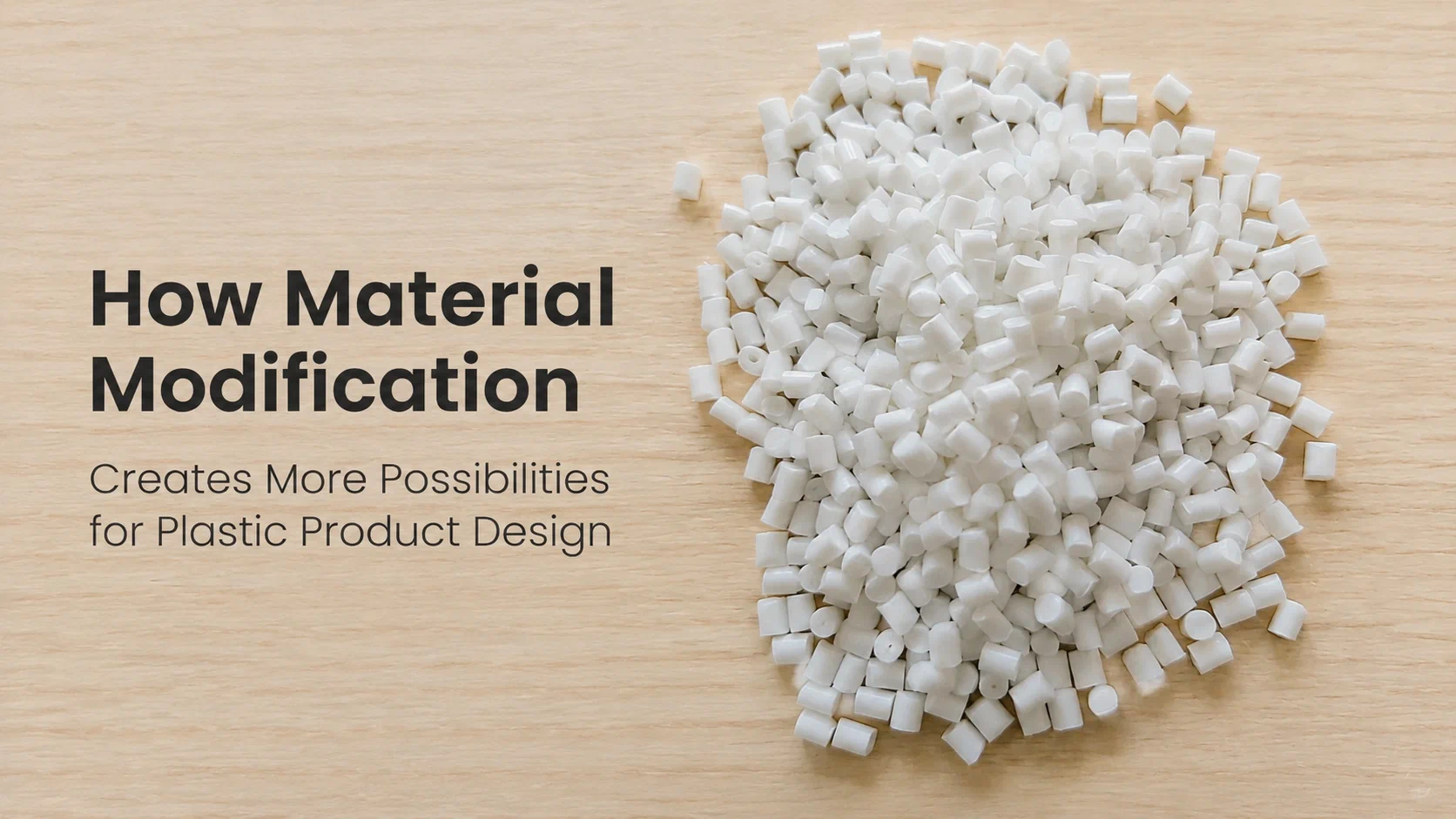
Plastic product design is not only determined by shape and structure. The selected material has a direct impact on product performance, manufacturing feasibility, and service life. While standard plastics can meet many basic requirements, some applications require additional properties that cannot be achieved through conventional materials alone.
Material modification provides a way to expand the capabilities of plastic materials by improving specific performance characteristics. Through adding reinforcing components, functional additives, or adjusting material formulations, engineers can develop plastic materials that better match the requirements of different products.
One of the biggest advantages of material modification is that it gives designers more freedom when developing plastic components. In the past, some products required metal materials because standard plastics could not provide enough strength, heat resistance, or durability. Modified engineering plastics provide alternative solutions by improving material performance while maintaining the lightweight and processing advantages of plastics.
Strength improvement is one of the most common goals of material modification. For structural plastic components that need to withstand mechanical loads, reinforced materials such as glass fiber reinforced PA6 and PA66 can provide higher stiffness and better load-bearing capability. This allows designers to create lighter components without sacrificing required performance.
Thermal performance is another important factor in product design. Some plastic parts operate near heat sources or in environments with continuous temperature changes. Standard materials may experience reduced strength or dimensional changes under these conditions. High temperature modified plastics help maintain stable performance and extend component service life.
Material modification also improves product reliability by solving common performance limitations. For example, toughened plastics can reduce cracking risks in impact applications, flame retardant materials can improve safety requirements, and conductive or antistatic materials can provide better control of electrical properties.
The relationship between material selection and product structure is also important during the design process. Different materials have different shrinkage characteristics, flow behaviors, and mechanical properties during injection molding. Considering material performance at the early design stage helps engineers optimize part structures and avoid manufacturing issues.
For plastic product development, choosing a suitable material is not simply about selecting a common resin grade. Engineers need to evaluate factors including application environment, mechanical requirements, temperature conditions, appearance expectations, and production processes.
Customized material solutions provide greater flexibility for solving specific product challenges. Instead of changing the product design to fit the limitations of standard materials, manufacturers can modify the material itself to achieve the required performance targets.
Material modification technology also supports the development of more advanced plastic applications. Products that require lightweight structures, improved durability, electrical performance, or special environmental resistance can benefit from customized engineering plastics.
The combination of material development and injection molding expertise creates a more complete approach to plastic product manufacturing. By understanding both material characteristics and production requirements, manufacturers can help customers transform product concepts into reliable plastic components.
From modified nylon and reinforced engineering plastics to functional materials such as flame retardant and conductive plastics, material modification continues to expand what plastic products can achieve. It provides designers and manufacturers with more options to develop components that meet increasingly specific performance requirements.
Techinherit provides customized plastic material solutions, including modified PA6, PA66, reinforced nylon, functional engineering plastics, and performance optimization services. Through material development and manufacturing experience, we help customers select and develop suitable materials for different plastic product applications.
Request a Free Design Review
Looking to reduce the cost of your next plastic injection molding project? Contact our engineering team today for a free consultation.
