
Improving Strength and Durability Through Plastic Material Optimization
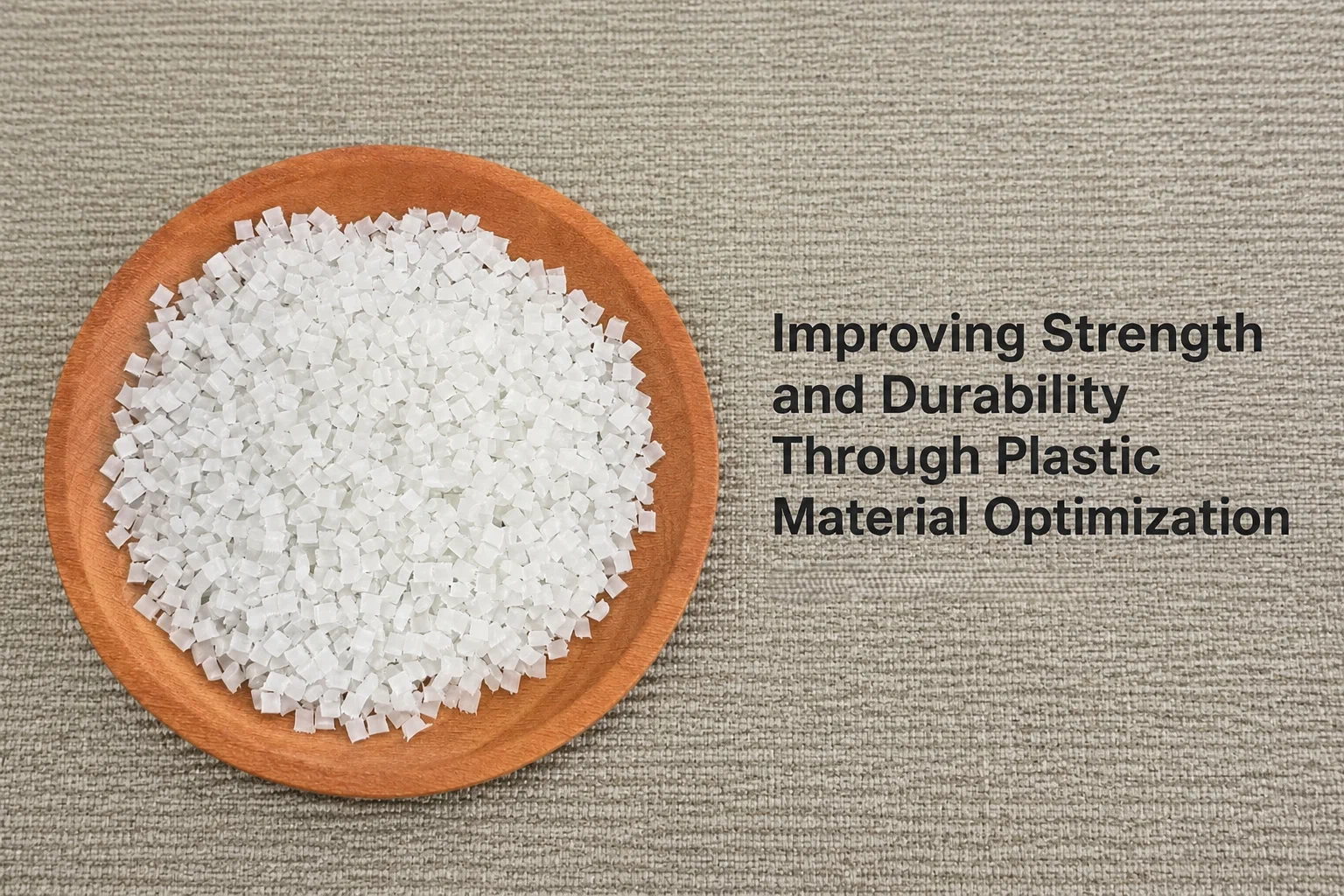
Plastic materials are widely used in modern manufacturing because of their lightweight, flexible processing, and cost advantages. However, standard plastic materials may not always provide enough strength and durability for components that operate under continuous mechanical stress, impact, or harsh environmental conditions.
For demanding applications, improving the performance of plastic materials requires more than simply selecting a different resin grade. Material optimization focuses on adjusting material properties to achieve a better balance between strength, toughness, dimensional stability, and long-term reliability.
One of the main approaches to improving plastic strength is material reinforcement. By adding reinforcing materials such as glass fiber, the mechanical properties of engineering plastics can be significantly enhanced. Glass fiber reinforced nylon, including PA6 GF and PA66 GF materials, is commonly used when plastic components require higher stiffness and load-bearing capability.
Compared with standard nylon materials, reinforced nylon provides improved tensile strength and better resistance to deformation under stress. This makes it suitable for structural components that need to maintain stable performance during long-term operation.
Durability is another important factor in plastic component performance. A material that has high initial strength may still experience degradation when exposed to impact, heat, chemicals, or repeated mechanical loads. Material optimization helps improve resistance against these factors by introducing suitable modification technologies.
For applications requiring better impact resistance, toughened plastic materials can be developed by improving the toughness of the polymer structure. Toughened nylon materials, for example, can reduce the risk of cracking and improve reliability in products exposed to vibration or impact forces.
Thermal conditions also have a major influence on material durability. Plastic components used in high-temperature environments may experience reduced strength and accelerated aging. Heat-resistant modification allows materials to maintain better mechanical performance under elevated temperatures, extending the service life of the final component.
Material optimization also plays an important role in improving dimensional stability. During injection molding and product operation, plastic parts may experience shrinkage or deformation due to temperature changes and internal stress. Proper material selection and modification can reduce these effects and improve product consistency.
The optimization process usually begins with understanding the actual requirements of the application. Engineers need to evaluate factors such as mechanical load, operating temperature, environmental conditions, production method, and expected service life before selecting or developing a suitable material solution.
Different performance requirements require different modification approaches. For example:
- Glass fiber reinforcement improves strength and stiffness.
- Toughening modification improves impact resistance.
- Heat stabilizers improve high-temperature performance.
- Flame retardant additives improve safety characteristics.
- Conductive fillers provide electrical performance control.
The combination of material optimization and injection molding knowledge is also essential. A well-developed material needs to match the manufacturing process to achieve the expected performance. Processing temperature, mold design, and cooling conditions can all influence the final properties of plastic components.
Customized material solutions allow manufacturers to overcome limitations of standard plastics and create components with improved reliability. Instead of changing product designs to adapt to material limitations, engineers can optimize the material itself to achieve the required performance targets.
As plastic applications become more demanding, material optimization has become an important approach for developing stronger and more durable plastic components. Through advanced modification technologies and engineering experience, manufacturers can create materials that better match specific product requirements.
Techinherit provides customized plastic material solutions, including modified PA6, PA66, reinforced nylon, toughened plastics, and functional engineering materials. By combining material development with manufacturing experience, we help customers improve the performance and reliability of plastic components.
Request a Free Design Review
Looking to reduce the cost of your next plastic injection molding project? Contact our engineering team today for a free consultation.
