
How Injection Molding Manufacturers Improve Plastic Part Quality Through Process Optimization
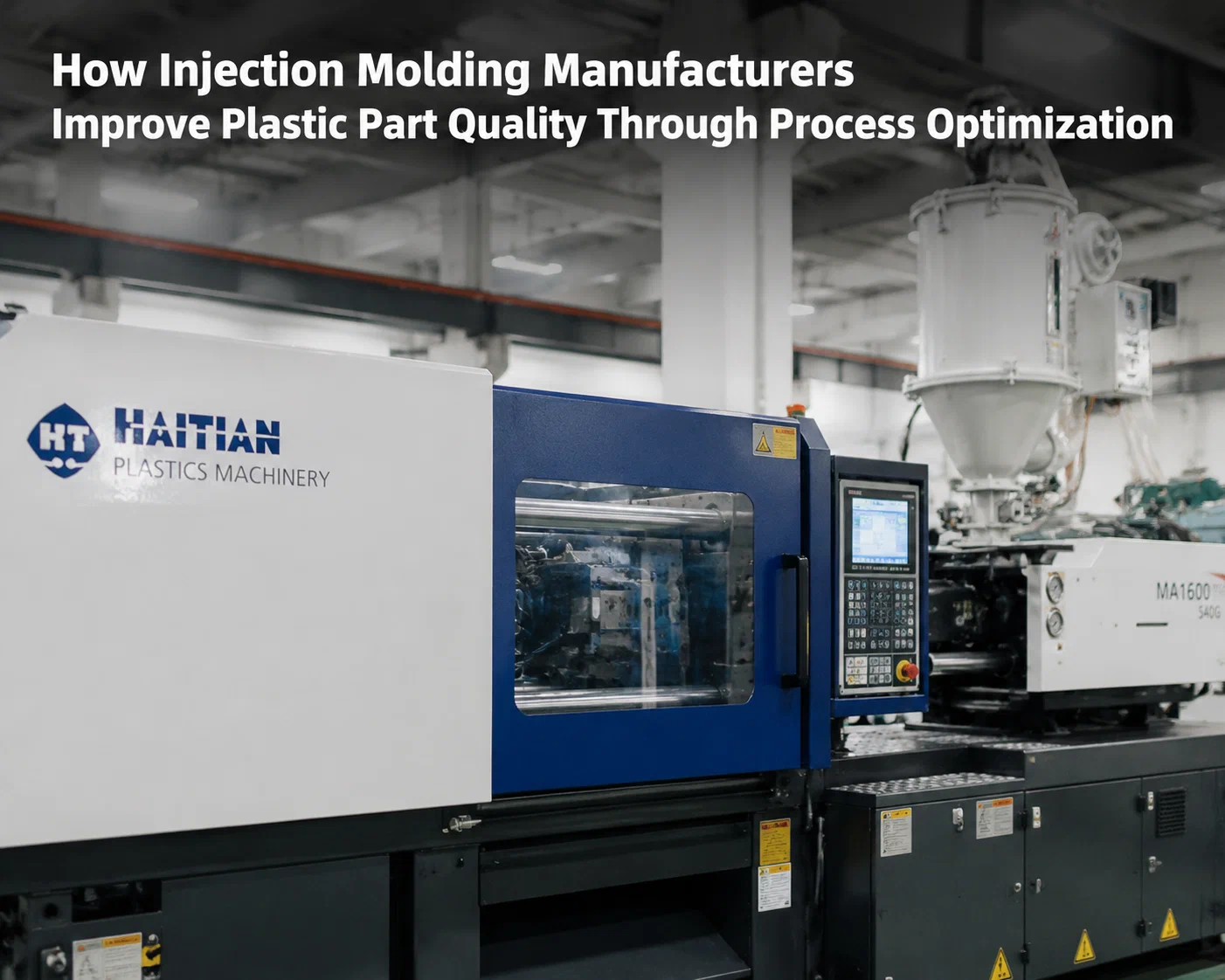
Plastic part quality is one of the most important factors that customers consider when selecting an injection molding manufacturer. As products become more complex and performance requirements continue to increase, manufacturers need more than basic injection molding equipment to achieve stable production results. Effective process optimization has become a critical approach for improving product consistency, reducing defects, and ensuring reliable plastic component performance.
Injection molding is a manufacturing process influenced by multiple factors, including material characteristics, mold structure, machine settings, and production conditions. Even small variations in the process can affect the final quality of plastic parts. Therefore, professional injection molding manufacturers focus on optimizing every stage of production to create a stable and repeatable manufacturing process.
One of the key areas of process optimization is injection molding parameter control. Parameters such as injection speed, injection pressure, holding pressure, temperature settings, and cooling time directly influence the quality of molded parts. Proper adjustment of these parameters helps ensure that molten plastic fills the mold cavity evenly, reduces internal stress, and improves dimensional accuracy.
Material selection is another important factor affecting plastic part quality. Different engineering plastics have different processing characteristics and performance requirements. Materials such as PA6, PA66, PC, ABS, and PBT require different molding conditions to achieve optimal results. Injection molding manufacturers need to understand material behavior and select suitable processing methods based on the application requirements of the final product.
For example, reinforced materials such as PA66 GF30 require careful process control because glass fibers influence melt flow, shrinkage behavior, and mechanical performance. By optimizing injection speed, mold temperature, and cooling conditions, manufacturers can improve fiber distribution, reduce deformation, and maintain consistent mechanical properties.
Mold design optimization also plays an essential role in improving plastic part quality. A well-designed mold helps achieve balanced material flow, uniform filling, and stable cooling. Factors such as gate location, runner design, venting system, and cooling channel layout can significantly affect the appearance and performance of injection molded components.
Before mass production, experienced injection molding manufacturers often use engineering analysis methods such as mold flow analysis to predict potential problems. These simulations help identify possible issues including uneven filling, excessive pressure, air traps, and warpage risks. By solving these problems during the development stage, manufacturers can reduce production adjustments and improve project efficiency.
Production monitoring and quality control are also important parts of process optimization. Modern injection molding production requires continuous monitoring of machine conditions, product dimensions, and process stability. Through regular inspections and data collection, manufacturers can quickly identify changes in production conditions and maintain consistent product quality.
Reducing manufacturing defects is another major goal of injection molding process optimization. Common injection molding defects such as warpage, sink marks, short shots, weld lines, and flash can affect product appearance and performance. Through improved mold design, optimized parameters, and better material management, manufacturers can reduce these issues and improve overall production reliability.
Automation technology has also contributed to better injection molding quality. Automated material feeding systems, robotic handling equipment, and intelligent production monitoring help reduce human error and improve manufacturing consistency. These technologies allow manufacturers to maintain stable production standards, especially for large-volume plastic component manufacturing.
In addition to production efficiency, process optimization helps improve long-term product reliability. Plastic components produced under stable conditions typically have better dimensional accuracy, mechanical performance, and durability. This is especially important for industries requiring high-performance plastic parts, where product failure can result in increased costs and customer concerns.
A professional injection molding manufacturer does not only provide molding equipment and production capacity. It also provides engineering support, material knowledge, mold development capabilities, and quality management throughout the entire manufacturing process. These capabilities allow customers to transform product designs into reliable plastic components.
As global industries continue to demand higher quality plastic products, injection molding process optimization will remain an important factor in successful manufacturing. By combining advanced technology, engineering experience, and strict quality control, manufacturers can deliver plastic components that meet complex application requirements.
Techinherit provides integrated plastic manufacturing solutions, including mold development, engineering plastic processing, precision injection molding, and quality-controlled production services. Through continuous process optimization and manufacturing expertise, we help customers develop stable and reliable plastic components.
Request a Free Design Review
Looking to reduce the cost of your next plastic injection molding project? Contact our engineering team today for a free consultation.
